

Modified Nylon PA6 · Premium Heat Grade
PA6 ETF02 · 30% Glass Fiber Heat-Age Stabilized High-Temperature PA6 Pellets
Premium PA6 compound reinforced with 30% chopped glass fiber and formulated with a proprietary CuI/KI halide salt + aromatic diamine anti-oxidant dual heat-stabilizer package. Delivers ≥80% tensile strength retention after 3,000 hours of 150°C continuous air aging (vs <40% for unstabilized PA6 GF30). HDT reaches 210°C at 0.45 MPa. Black standard with carbon black UV-absorber synergist. Designed for automotive headlamp housings, underhood components near exhaust, and industrial electric motor end brackets.
| Tensile Strength (ISO 527) | 152 MPa |
|---|---|
| Tensile Retention @ 150°C × 3,000h | ≥ 80 % |
| Elongation Retention @ 150°C × 3,000h | ≥ 55 % |
| HDT @ 0.45 MPa (ISO 75/Bf) | 210 °C |
| HDT @ 1.82 MPa | 188 °C |
| Vicat Softening Temp | 207 °C |
| Comparative Tracking Index CTI | ≥ 500 V (PLC 1) |
| Certifications | ISO 9001, ROHS 2.0, REACH |
Product Overview & Key Features
PA6 ETF02 is a high-temperature heat-age-stabilized engineering plastic compound produced by Juhai Plastics using a premium PA6 base resin reinforced with 30% high-quality silane-sized chopped E-glass fibers and compounded on our co-rotating twin-screw extrusion line with a proprietary dual-package heat stabilizer: Copper(I) Iodide / Potassium Iodide (CuI/KI) halide salt plus an aromatic diamine secondary anti-oxidant. The two stabilizer chemistries work synergistically — the CuI/KI chelates thermally generated amide free-radical chain ends while the aromatic amine AO quenches peroxide decomposition — giving PA6 ETF02 roughly 4–5× the long-term thermal life of an unstabilized PA6 GF30 in the critical 120–160°C automotive and industrial operating window.
Core Performance Advantages
- Class-Leading Long-Term Heat Aging Retention: After 3,000 hours of continuous forced-air aging at 150°C, tensile strength stays above 80% of the unaged value and elongation at break above 55%. Unstabilized PA6 GF30 drops below 40% tensile and becomes brittle under the same conditions.
- High HDT and Vicat for Peak Loads: Heat Deflection Temperature reaches 210°C at 0.45 MPa and 188°C at 1.82 MPa, with Vicat softening at 207°C. Short-duration peak temperatures of 175°C are tolerated without structural failure.
- 30% Glass Fiber for Structural Rigidity: 152 MPa tensile strength and 7,300 MPa flexural modulus provide the stiffness required for headlamp reflector alignment, engine bay air-box geometry retention, and motor end bracket bearing-bore concentricity under load and heat.
- Non-Staining Copper Stabilizer Package: Inhibited CuI/KI complex passes IEC 60426 contact-corrosion tests against bare copper, brass, tin and aluminum with less than 0.3 mg/cm² metal loss — no green-oxide staining on lamp heat sinks or motor commutator contacts.
- Carbon-Black Synergist (Standard Color): 2.0% carbon black pigment acts as both a UV absorber (for headlamp clear-lens outdoor exposure) and a surface free-radical quencher that modestly extends heat-aging retention by 5–7% versus natural-color variants.
- CTI ≥ 500 V for Electric Motor Use: Comparative Tracking Index of ≥500 V (PLC 1) satisfies the creepage-and-clearance requirements for molded commutator end brackets mounted directly above insulated armature windings.
Cost Tier Positioning
PA6 ETF02 is positioned as a Premium cost-tier PA6 compound within the Juhai product range, reflecting its specialized heat-stabilizer package and 150°C long-term heat rating. Compare with our Standard-tier PA6 BFE01 (general-purpose 30% GF premium PA6 without CuI/KI heat package) and our Economy-tier PA6 BFE06 or PA6 GBA35 (30–35% GF economy PA6 grades for medium-temperature structural use). For applications requiring 250°C-class HDT beyond ETF02's 210°C limit, see PA66 BFE04 under Related Products below.
Recommended Applications
Automotive Lamp Housings
Headlamp and rear-lamp reflector housings mounted adjacent to HID / LED bulb heat sinks (140–160°C local hot spot). UV-stable black color.
Automotive Underhood
Air-filter housings near exhaust manifolds, turbo resonator end caps, secondary intake brackets, battery-tray hold-downs (120–145°C cont.).
Electric Motor Components
Commutator end brackets, brush-holder supports, bearing retainers for 132–200 frame industrial motors (125–140°C winding heat).
High-Temp Electrical
CTI-500V rated inverter connector housings, relay bases with internal heat sinks, line reactor bobbins near IGBT modules.
Power Tool Heat Zones
Electric hammer and angle-grinder motor supports behind the commutator; hot-air tool internal baffles and heater-block shrouds.
Industrial Heat Exposed
Boiler sensor housings, burner-igniter bodies, solar micro-inverter frames, and any part rated >120°C long-term without embrittlement.
Complete Mechanical & Physical Properties
All values tested per ISO standards using 4 mm injection-molded ISO multipurpose test specimens conditioned at 23°C / 50% RH for 16 hours unless otherwise noted. Heat-aging retention values measured on specimens withdrawn from a forced-draft air-circulating aging oven per ISO 2578. Individual batch Certificate of Conformance (CoC) supplied with every shipment, including aged tensile data at 1,000h for quality verification.
Mechanical Properties (Unaged)
| Property | Test Standard | Value |
|---|---|---|
| Tensile Strength | ISO 527 | 152 MPa |
| Tensile Modulus of Elasticity | ISO 527 | 8,200 MPa |
| Elongation at Yield | ISO 527 | 2.4 % |
| Elongation at Break | ISO 527 | 2.8 % |
| Flexural Strength | ISO 178 | 230 MPa |
| Flexural Modulus | ISO 178 | 7,300 MPa |
| Notched Izod Impact (1A), 23°C | ISO 180 | 14 kJ/m² |
| Unnotched Izod Impact (1U), 23°C | ISO 180 | 65 kJ/m² |
| Charpy Notched Impact (1eA), 23°C | ISO 179 | 11 kJ/m² |
| Rockwell Hardness (R Scale) | ISO 2039-2 | R 112 |
Heat Aging Retention Properties (Mandatory Validation)
| Property | Aging Condition | Guaranteed Minimum Retention |
|---|---|---|
| Tensile Strength Retention | 130°C × 1,000 h Forced Air | ≥ 92 % (typical 95%) |
| Tensile Strength Retention | 150°C × 3,000 h Forced Air | ≥ 80 % (typical 84%) |
| Elongation at Break Retention | 150°C × 3,000 h Forced Air | ≥ 55 % (typical 62%) |
| Notched Izod Impact Retention | 150°C × 3,000 h Forced Air | ≥ 60 % (typical 68%) |
| Tensile Strength Retention | 170°C × 500 h Forced Air | ≥ 62 % (typical 67%) |
| HDT @ 0.45 MPa (After 150°C×3,000h) | ISO 75/Bf Post-Aging | ≥ 205 °C |
Low-Temperature and Impact After Environmental Conditioning
For automotive programs that combine underhood heat with winter cold-soak requirements, PA6 ETF02 maintains usable impact toughness down to -30°C after standard conditioning. The data below is for information only; please request the full cold-impact appendix from our engineering team if your spec mandates a specific -40°C pass/fail criterion.
| Property | Condition | Value |
|---|---|---|
| Notched Izod Impact (1A) | 23°C, conditioned 16h 50% RH (standard) | 14 kJ/m² |
| Notched Izod Impact (1A) | -20°C, conditioned 4h cold soak | 8.5 kJ/m² (typical, no break ductile) |
| Notched Izod Impact (1A) | -30°C, conditioned 4h cold soak | 6.2 kJ/m² (typical, partial break) |
| Notched Izod Impact (1A) | -40°C, conditioned 4h cold soak | 4.0 kJ/m² (typical, brittle) — consider ETF01 toughened grade |
| Tensile Strength (after 23°C / 50% RH equilibrium) | ISO 527, 2 weeks conditioning | ~ 132 MPa (plasticized by moisture) |
| Notched Izod Impact (after moisture equilibrium) | ISO 180, 2 weeks 50% RH | ~ 17 kJ/m² (moisture toughening effect) |
| Dimensional Change (post 150°C × 1000h) | 60 × 60 mm plaque, flow direction | ≤ +0.05 % (no blistering or warpage) |
Quality Control & Manufacturing Test Methodology
Every lot of PA6 ETF02 passes through our ISO 9001 stage-gate quality process before release. Because the heat-aging retention performance is the critical differentiator of this Premium-tier grade, we perform real 150°C accelerated aging tests on every production batch — not just on a periodic-type basis. This is one reason PA6 ETF02 carries a slight price premium over a Standard-tier PA6 GF30 grade.
Lot Release Testing Matrix (Performed on Every 1,000 kg Batch)
| Test Item | Test Standard / Method | Frequency | Specification Limit (Pass = Release) |
|---|---|---|---|
| Melt Volume Flow Rate (MVR) @ 275°C / 5 kg | ISO 1133-1 | 100% of lots | 30 – 36 cm³/10 min (±9% target 33) |
| Density (granule) | ISO 1183-1 (A method) | 100% of lots | 1.335 – 1.365 g/cm³ |
| Moisture Content (as-packaged) | Karl Fischer titration | 100% of lots | < 0.15 % (customer dries to < 0.08% before molding) |
| Glass Fiber Content (combustion / LOI) | ISO 3451-1 | 100% of lots | 28.5 – 31.5 % by weight |
| Unaged Tensile Strength (ISO bar) | ISO 527-1/-2, 1 mm/min | 100% of lots, 5 bars average | ≥ 146 MPa (CpK ≥ 1.33 vs 152 nominal) |
| Unaged Tensile Modulus | ISO 527 with extensometer | 100% of lots | ≥ 7,800 MPa |
| Notched Izod Impact @ 23°C | ISO 180/1A, 10 specimens | 100% of lots | ≥ 12 kJ/m² individual, ≥ 13.5 avg |
| HDT @ 0.45 MPa (unaged) | ISO 75-1/Bf, flatwise | Every lot, 3 specimens | ≥ 207 °C (CpK ≥ 1.3 vs 210 nominal) |
| Heat-Aging Retention @ 150°C × 1,000 h (Lot Validation) | Internal / ISO 2578 protocol | 100% of lots (12 bars pulled at 1,000h) | ≥ 88% tensile retention at 1,000h (interpolates to ≥80% at 3,000h per Arrhenius projection confirmed on quarterly full 3,000h study) |
| Color L*a*b* (granule, black standard) | CIE LAB D65 10°, 30 mm plaque | 100% of lots vs retention standard | ΔE (CMC 2:1) ≤ 1.0 vs master color plaque |
| ROHS / REACH SVHC Screening | XRF + in-house wet chemistry | 100% of lots; full GC-MS quarterly | Pass per EU 2015/863 and SVHC 248th update |
Statistical Process Control and CpK Targets
- Tensile strength: Nominal 152 MPa, lower spec 146 MPa → minimum CpK ≥ 1.33 on every lot (actual running CpK ≈ 1.62 over past 12 months).
- HDT @ 0.45 MPa: Nominal 210°C, lower spec 207°C → CpK ≥ 1.30.
- MVR 275°C/5 kg: Nominal 33 cm³/10 min, window 30–36 → CpK ≥ 1.45.
- 1,000h tensile retention at 150°C: Lower spec 88% → running average 92.4%, CpK ≈ 1.18 monitored quarterly with full 3,000h studies per ISO 2578 Arrhenius method.
- Full SPC package including X-bar R charts, histogram and CpK report for the last 20 production lots available on request for automotive PPAP / IMDS submissions.
Thermal Properties
| Property | Test Standard | Value |
|---|---|---|
| Heat Deflection Temperature @ 1.82 MPa | ISO 75/Af | 188 °C |
| Heat Deflection Temperature @ 0.45 MPa | ISO 75/Bf | 210 °C |
| Vicat Softening Temp (B/50 Load) | ISO 306 | 207 °C |
| Melting Peak (DSC, 10°C/min) | ISO 11357 | 221 °C |
| Coefficient of Linear Thermal Expansion (Flow) | ISO 11359-2 | 3.0 × 10⁻⁵ °C⁻¹ |
| Long-Term Continuous Use Temp (Air) | In-house / ISO 2578 extrap. | 150 °C (3,000h, >80% tens. ret.) |
| Short-Term Peak Temperature | Cumulative < 100 h, no load | 175 °C |
Physical, Electrical, Processing & Other
| Property | Test Standard | Value |
|---|---|---|
| Density | ISO 1183 | 1.35 g/cm³ |
| Melt Volume-Flow Rate (MVR) 275°C, 5.0 kgf | ISO 1133 | 33 cm³/10 min |
| Mold Shrinkage — Flow Direction | ISO 294-4 | 0.33 % |
| Mold Shrinkage — Cross Direction | ISO 294-4 | 0.92 % |
| Water Absorption (24 h, 23°C immersion) | ISO 62 | 0.98 % |
| Equilibrium Water Absorption (50% RH) | ISO 62, long term | ~ 2.8 % |
| Comparative Tracking Index CTI | IEC 60112 | ≥ 500 V (Performance Level 1) |
| Surface Resistivity | IEC 60093 | 1 × 10¹⁵ Ω/sq |
| Volume Resistivity | IEC 60093 | 1 × 10¹⁴ Ω·cm |
| Dielectric Strength (short-time, 2 mm) | IEC 60243-1 | 18 kV/mm |
| Contact Corrosion (Cu, Brass, Al, Sn) 120°C×1000h | IEC 60426 | < 0.3 mg/cm² loss (PASS) |
Processing & Handling Guidelines
Injection Molding Parameters
PA6 ETF02 has specific residence-time and temperature limits because the CuI halide component can catalyze PA6 amide-bond hydrolysis or chain scission if held above 280°C for extended periods. Observe the settings below and install a barrel-residence timer alarm on the molding machine for parts with long cycle times.
| Process Parameter | Recommended Range | Notes / Limits |
|---|---|---|
| Pre-Drying (MANDATORY) | 80 °C × 4 hours; dehumidifying dryer to < 0.08% moisture | Ambient air drying not acceptable. Use -40°C dew-point dryer. Moisture >0.15% causes splay AND accelerates in-barrel hydrolysis. |
| Barrel Temp — Rear / Middle / Front | 240 °C / 255 °C / 268 °C | Gradual profile; avoid front-zone spikes above 275°C. |
| Nozzle Temperature | 265 - 272 °C | Slightly lower than front zone to prevent drooling. Never exceed 275°C at nozzle. |
| Maximum Barrel Residence Time | < 6 minutes at ≤ 275 °C; < 3 minutes if any zone hits 280 °C | CRITICAL. Long residence + high temp → CuI catalyzed chain scission → loss of impact and heat-retention properties. Set screw recovery delay and shot-size accordingly. |
| Mold Temperature | 70 - 95 °C | 85°C+ recommended for Class-A lamp-housing surface and optimal GF wet-out. |
| Injection Pressure | 85 - 135 MPa | Thin lamp ribs and end-bracket bosses may need the upper end. |
| Holding Pressure | 55 - 75% of injection pressure | Holding time: 12-28 s depending on wall thickness. |
| Screw Back-Pressure | 4 - 8 bar | Moderate back-pressure; avoid >10 bar to reduce shear heating and residence. |
| Screw Speed (RPM) | 70 - 130 rpm | Moderate speed minimizes shear-heat spike and fiber attrition. |
| Screw / Barrel Material | Through-hardened tool steel (HRC 55+) or bimetallic barrel | CuI/KI is mildly abrasive to nitrided barrels over 10,000+ hours; chrome plating alone is not sufficient. |
| Purge Between Material Changes | Natural unfilled PA6 or commercial PP-based purge compound | Do NOT purge ETF02 with unfilled PP or PE directly, as residual CuI may contaminate the next clear/transparent resin run. |
Storage & Shelf Life
- Store in original sealed bags below 35°C and below 70% relative humidity.
- Keep away from direct sunlight and sources of heat or open flame.
- Shelf life under proper conditions: 24 months from manufacturing date printed on bag label.
- Once opened, use contents within 3 weeks or re-seal with desiccant packs to prevent pre-moisture pickup.
- Do not mix ETF02 pellets with unstabilized PA6 GF grades in the same gaylord or dryer hopper — even 5% of an unstabilized grade can lower the overall heat-retention curve below spec.
Injection Molding Troubleshooting Guide
Because PA6 ETF02 contains both a 30% glass-fiber load and the sensitive CuI/KI halide heat-stabilizer package, certain defect modes appear more frequently than with a standard unfilled or unstabilized PA6. Use the table below as a first-pass troubleshooting reference; for persistent issues, send us a photo of the defect, your machine barrel-temperature log, and the current MVR of your regrind fraction — our process engineers will respond with a specific corrective-action sheet within one working day.
| Defect / Symptom | Most Likely Root Cause(s) | Step-by-Step Corrective Action |
|---|---|---|
| Splay marks (silver streaks) on the gate side or along rib bases | 1) Insufficient pre-drying, residual moisture > 0.08%; 2) Too-rapid injection speed through small gate; 3) Leaking non-return valve causing backflow and moisture steaming. | Step 1: Re-measure granule moisture with Karl Fischer immediately at machine throat. If >0.08%: extend dryer time 2 more hours at 85°C, confirm dew-point at dryer outlet ≤ -40°C. Step 2: Drop injection speed by 20% in the first stage, increase by 5% only after splay disappears. Step 3: Purge and inspect check ring / non-return valve for wear (gap > 0.1 mm → replace). Step 4: If using regrind, cap regrind fraction at ≤ 20% and dry regrind separately before blending back — regrind picks up 2–3× moisture from ambient. |
| Brittle part edges or unexpectedly low notched Izod on molded parts | 1) CuI-catalyzed chain scission from too-long barrel residence at high temp; 2) GF fiber attrition from excessive screw speed or >10 bar back-pressure; 3) Degraded regrind (recycled many times at too-hot profile). | Step 1: Calculate barrel residence = (barrel capacity cm³ × melt density 1.07 g/cm³) ÷ shot weight g × cycle time s. Must be < 360 s at ≤ 275°C; if over, reduce shot size by increasing cushion or moving to smaller machine. Step 2: Drop front/nozzle temp 5°C each step, verify residence alarm set. Step 3: Reduce screw RPM to 80, drop back-pressure to 4–5 bar. Step 4: If using >20% regrind, send regrind sample for MVR vs pellet MVR — ΔMVR > +15 points = chain degraded; discard regrind lot. |
| Float marks / glass-fiber read-through on Class A lamp housing surface | 1) Mold temperature too low (< 75°C); 2) Holding pressure too low or hold time insufficient for wall thickness; 3) Poor gate land size causing freeze-off before skin layer can smooth. | Step 1: Raise mold to 85–90°C using a pressurized water or oil temperature controller — this is the single largest lever for ETF02 surface. Step 2: Increase hold pressure to 70–80% of injection peak; add 3–5 s hold time per mm of nominal wall. Step 3: If runner/allowing, polish gate land 5–10 mm and confirm gate depth ≥ 0.8 mm for GF material. Step 4: For hot-runner systems, drop manifold temp 10°C to reduce premature freeze before skin packs. |
| Warpage on flat end-bracket flange or lamp reflector back-plate | 1) Asymmetric shrinkage from unbalanced mold temperature (stationary vs moving side delta > 10°C); 2) Holding pressure switched off too early before gate freeze; 3) Glass-fiber orientation imbalance due to single-gate flow pattern on large part. | Step 1: Verify moving-half and fixed-half mold circuits individually — set both to 85°C ± 2°C (use separate temp-control units, no series loop). Step 2: Extend hold time by 5 s; confirm by short-shot study that gate does not freeze at cutoff. Step 3: For parts > 200 mm across, review gating with our engineer. Fan gate or diaphragm gate often eliminates warpage on round reflector-back / end-bracket parts. Step 4: Slight shrinkage compensation in tool steel (0.33% flow, 0.92% cross) must be applied uniformly. |
| Brown / amber discoloration streaks in nozzle area or at last-fill | 1) Dead spots in barrel / nozzle tip holding material at high temp > 8 min; 2) Material hang-up at cracked torpedo or bimetallic barrel liner gap; 3) Excessive front zone temp > 278°C combined with long cycle. | Step 1: Drop front zone and nozzle temp to 260°C, purge 10 full shots of natural PA6. Step 2: Inspect nozzle tip / nozzle body for coked material buildup — soak in PE purge overnight if needed. Step 3: Pull screw and inspect flights, check ring, and torpedo for wear grooves or polymer degradation if discoloration continues after purge. Step 4: Install screw-idle timer that retracts screw and lowers rear-zone temp 10°C during downtime > 2 min. |
| Dimensional shift on bearing bore / reflector alignment feature after 120°C post-mold annealing | 1) Residual molded-in stress released at temperature; 2) Wall thickness imbalance causing non-uniform GF orientation; 3) Under-packed section with incomplete skin consolidation. | Step 1: Verify post-mold annealing cycle (if used) — heat up slowly at 0.5°C/min to 110°C, hold 2h per mm of max wall, cool slowly. Step 2: Increase pack/hold phase pressure by 10%; extend hold to ensure gate does not freeze before packing peak. Step 3: If feature is near weld line, move or add venting; confirm weld-line strength by testing. Step 4: For precision bearing-bore applications, prototype with ETF02 at the final tool geometry using your production molding parameters — dimensional data at heat is available from our application lab for common bracket geometries. |
| Nozzle drooling between shots causing gate vestige or stringing | 1) Nozzle temp 3–5°C too high vs front zone; 2) Decompression / suck-back distance insufficient or too fast; 3) MVR at upper end of 30–36 range causing runnier melt. | Step 1: Drop nozzle temp to 262–265°C, keep front at 268–270. Step 2: Add 3–5 mm suck-back after recovery, slow suck-back to 15–20 mm/s (fast suck-back pulls air into barrel, causes next-shot splay). Step 3: If lot MVR is confirmed at 35+, consider 2°C cooler rear/middle profile. Step 4: For very long idle periods, use nozzle tip shutoff valve if available. |
Certifications, Compliance & Customer Reviews
Material Certifications and Compliance Statements
PA6 ETF02 is manufactured under our ISO 9001:2015 certified quality system at the Ningbo Juhai Lianghui production site. All production lots are tested against mandatory regional regulatory requirements; certificates and Letters of Compliance (LoC) are available for download on request, or automatically shipped with every commercial invoice.
ISO 9001:2015
Quality management system — full production line, incoming inspection and final lot release certified by CNAS accredited third-party auditor. Certificate No. available on request.
ROHS 2.0 (EU 2015/863)
Restriction of 10 hazardous substances (Pb, Cd, Hg, Cr VI, PBB, PBDE, DIBP, DBP, BBP, DEHP). Every lot tested by XRF; full GC-MS scan performed quarterly. LoC provided per shipment.
REACH SVHC (EU)
Compliant with the 248th update of the Candidate List of Substances of Very High Concern. Annual third-party screening report available; below 0.1% w/w threshold for all listed SVHC.
IEC 60112 CTI ≥ 500 V
Comparative Tracking Index PLC 1 tested per IEC 60112 Solution A on 3 mm plaques. Satisfies creepage requirements for industrial motor end-bracket electrical insulation.
IEC 60426 Contact Corrosion
Inhibited CuI/KI package passes contact-corrosion test vs bare copper, brass, tinned copper, and aluminum at 120°C × 1,000h — weight loss below 0.3 mg/cm² on all coupons.
IMDS / PPAP Ready
Material data entry into IMDS system for automotive programs supported. Level-3 PPAP submission package (SPC, flow-down, CoC history, PFMEA) available for qualifying production parts.
Verified Customer Reviews & Case Studies
Quality Guarantee, Warranty & Technical Support Commitment
Because PA6 ETF02 is specified into safety-sensitive and long-life automotive and industrial applications, we back the material with a written material-performance warranty that goes beyond the standard 12-month defect warranty common in the compounding industry. The commitments below apply to every commercial PA6 ETF02 lot ordered through our Ningbo sales office and delivered against a signed Juhai sales order confirmation.
| Standard Defect Warranty | 12 months from date of shipment against manufacturing defects (incorrect GF content, wrong color, contamination, out-of-spec MVR / tensile / HDT that failed our QC but was shipped in error). 100% lot replacement + reimbursement of documented freight costs for a confirmed non-conforming lot. |
|---|---|
| Heat-Aging Performance Guarantee | Written 3,000-hour / 150°C tensile-retention guarantee of ≥ 80% for lots used within 18 months of manufacture, molded per Juhai recommended parameters (drying <0.08%, residence < 6 min ≤ 275°C). If your independent laboratory test shows retention below 80%, we will either refund 50% of the material purchase price for the affected lot or supply replacement material free of charge, at the buyer's option. Guarantee excludes misuse (e.g. contact with incompatible fluids, exposure beyond 175°C peaks). |
| Lot-to-Lot Property Consistency Warranty | ± 5% maximum variation on nominal tensile, modulus, HDT @ 0.45 MPa, and MVR across consecutive purchased lots within one 12-month blanket order. If any single lot falls outside ± 5% vs the baseline lot you qualified, Juhai will absorb the cost of your re-qualification testing up to USD 3,500 per incident. |
| Regulatory Compliance Warranty | Material manufactured and shipped will meet ROHS 2.0 (EU 2015/863) and EU REACH SVHC substance thresholds at the time of manufacture. If a competent EU member-state regulatory authority finds the material non-compliant due to a Juhai formulation change and imposes a penalty on the buyer, Juhai will indemnify the buyer for the documented regulatory fine up to a maximum of two times the purchase value of the affected shipment. |
| Engineering Technical Support (Response SLA) | Engineering support hotline + email support 08:00–18:00 Beijing / Shanghai GMT+8, Mon–Sat. Urgent production-stoppage molding issues receive a first-response technical email within 4 hours or a WeChat / WhatsApp voice call within 2 hours. Molding process optimization sheet, part stress analysis (simple FEA of bracket / lamp geometries), and trial material blending recommendations — all free of charge for active customers. |
| Sample and Datasheet Support | Free 2 kg evaluation sample of standard black PA6 ETF02 available for genuine OEM / Tier-1 / industrial molder evaluations; 1 kg additional sample (5 kg total max) available for pre-qualification molding trials with signed NDA. Full PDF datasheet including heat-retention curve charts, CpK history, and recommended gate-and-runner design guide sent within 24 hours of first inquiry. |
Packaging, Shipping & MOQ
| Standard Packaging | 25 kg heat-sealed kraft / PE composite export bag with inner aluminum moisture barrier. Bags clearly marked SKU PA6-ETF02, lot number, manufacture date, and heat-stabilizer lot code for traceability. |
|---|---|
| Pallet Configuration | 40 bags per standard ISPM-15 fumigated export pallet = 1,000 kg (1 MT) per pallet; stretch-wrapped with four plastic corner protectors and steel pallet strapping. |
| MOQ — Standard Black Color | 1,000 kg (1 full pallet / 40 bags × 25 kg). Smaller 100 kg trial bags available on request for qualifying automotive and motor OEM evaluation programs. |
| MOQ — Natural or Custom Color | 5,000 kg (5 pallets). Note: non-black formulation does not carry the published ≥80% 150°C×3000h heat-retention guarantee (reduced to ≥70%). |
| Stock Lead Time | 3-5 working days after receipt of payment (EXW / FOB Ningbo). |
| Custom Formulation MOQ | 10,000 kg (10 pallets) for CTI-600V derating, alternative non-halide stabilizer, or different GF content (20% / 35%). |
| 20 ft FCL Loading | ~ 20,000 kg (20 pallets of 1 MT) — palletized. 22 MT loose-loaded without pallets on request. |
| 40 ft HC FCL Loading | ~ 27,000 kg (27 pallets of 1 MT) — palletized. |
| Documentation Provided | Commercial Invoice, Packing List, Bill of Lading / AWB, Certificate of Origin (Form F / Form A on request), Certificate of Conformance (CoC including 150°C×1000h tensile retention for the lot), ROHS 2.0 / REACH SVHC Compliance Letter, MSDS on request. |
Grade Selection Matrix — Juhai PA6 Heat-Stabilized & Structural Family
Before committing to PA6 ETF02, use this side-by-side comparison with the three other Juhai PA6/PA66 structural grades that most frequently appear alongside ETF02 in automotive and industrial bill-of-material options. All grades use Economy / Standard / Premium tier positioning as noted. Our technical sales engineers can also recommend a hybrid approach (e.g., ETF02 for hot lamp-housing reflector cup + ETF01 for cold snap-fit bezel) if your part geometry contains multiple thermal zones with different requirements.
| Property / Selection Criterion | PA6 ETF02 This Grade · Premium Heat-Age |
PA6 ETF01 Premium Toughened Heat |
PA6 BFE01 Standard General-Purpose |
PA66 BFE04 Premium Even-Higher Heat |
|---|---|---|---|---|
| Cost Tier | Premium (highest in PA6 lineup) | Premium (+8–12% vs ETF02 due to elastomer) | Standard (-15–20% vs ETF02) | Premium (+20–28% vs ETF02 due to PA66 base) |
| Base Resin & GF | Premium PA6 + 30% E-glass | Premium PA6 + 30% E-glass + 8% elastomer | Premium PA6 + 30% E-glass | Premium PA66 + 30% E-glass |
| Heat Stabilizer Package | CuI/KI + Aromatic Amine AO (dual) | Same CuI/KI + Amine AO as ETF02 | Phenolic primary AO only (no halide heat) | CuI/KI + PA66-specific AO package |
| Tensile Strength (Unaged) | 152 MPa | 134 MPa (lower due to elastomer) | 160 MPa (highest of 30% GF PA6 family) | 172 MPa |
| Notched Izod Impact @ 23°C | 14 kJ/m² | 28 kJ/m² (toughened — best cold) | 16 kJ/m² | 15 kJ/m² |
| Notched Izod Impact @ -30°C | 6.2 kJ/m² (partial break) | 18 kJ/m² (no break — cold-snap fit) | 4.8 kJ/m² (brittle) | 7.5 kJ/m² |
| HDT @ 0.45 MPa | 210 °C | 206 °C | 203 °C | 250 °C (hottest of group) |
| Tensile Retention @ 150°C × 3,000h | ≥ 80 % (guaranteed, written warranty) | ≥ 78 % (guaranteed, slightly lower due to elastomer) | < 40 % (not intended; brittle) | ≥ 85 % (PA66 chemistry best at >160°C) |
| Max Continuous Use Long-Term | 150 °C (written guarantee) | 145 °C | 105 °C (unstabilized) | 175 °C |
| CTI (Comparative Tracking Index) | ≥ 500 V (PLC 1) | ≥ 475 V (PLC 1) | ≥ 600 V (PLC 0, electrical grade) | ≥ 550 V (PLC 1) |
| Standard Color | Black (CB, UV synergist) | Black (CB, UV synergist) | Black / Natural | Black |
| Melt Flow (MVR 275/5) | 33 cm³/10 min (easy fill thin ribs) | 24 cm³/10 min (lower due to elastomer) | 30 cm³/10 min | 22 cm³/10 min (PA66 higher melt visc.) |
| Best Application Fit | Headlamp housings, motor end brackets, hot underhood (120–160°C continuous) | Cold-climate lamp housings with snap-fit, underhood clips subject to -40°C impact | Medium-temp structural brackets, general industrial below 110°C — great value Standard tier | Turbo near-exhaust parts (160–180°C), 250°C HDT required specs, anything hotter than ETF02 limit |
| Approximate Price Point (EXW) — Reference Only | USD 2.10 / kg (Premium PA6 heat) | USD 2.28 / kg (Premium + elastomer) | USD 1.82 / kg (Standard general purpose) | USD 2.52 / kg (Premium PA66 heat) |
| CuI/KI Copper Contact Risk | Inhibited — IEC 60426 pass | Inhibited — IEC 60426 pass | No copper stabilizer at all — irrelevant | Inhibited — IEC 60426 pass |
| MOQ Standard Color | 1,000 kg (black only) | 1,000 kg (black only) | 1,000 kg (black); 3,000 kg (natural) | 1,000 kg (black) |
| Page / Link on This Site | (This page) | product-etf01-toughened.html | product-pa6-bfe01.html | product-pa66-bfe04.html |
When to Select PA6 ETF02 vs. Alternatives — Decision Tree Summary
- ✅ Choose ETF02 if (a) continuous air-aging exposure 120–150°C for >1,000h is required, (b) a written 150°C × 3,000h ≥ 80% tensile-retention guarantee is demanded by OEM spec, (c) carbon-black color is acceptable or preferred, and (d) cost must stay below PA66 GF heat grades.
- 🔀 Step up to ETF01 (toughened) if the part has snap-fit features or cold impact down to -30/-40°C combined with heat-aging (e.g., automotive lamp bezel in Scandinavian or Canadian winter).
- 🔀 Save money with BFE01 (Standard) if the max continuous operating temp stays below 105°C and there is no long-term heat-aging mandate — BFE01 has the same 30% GF and premium PA6 base at roughly 18% lower per-kilo cost.
- 🔀 Move to PA66 BFE04 if the spec requires HDT above 220°C, continuous use above 160°C, or the part sits within 100 mm of a turbocharger / catalytic converter hot face.
Request Custom Quote, Sample or Datasheet
Fill in the form below for PA6 ETF02 or any other grade. Our technical sales engineer — who handles automotive lamp-housing and industrial motor programs specifically — will contact you within 24 hours with the full PDF datasheet (including 130/150/170°C heat-retention curve charts), EXW / FOB / CFR pricing, shipment lead time, and sample logistics. Free 2 kg samples are available for genuine evaluation purposes (freight collect for international shipments).
Inquiry Form — PA6 ETF02 Heat-Age Stabilized High-Temp PA6 GF30
Frequently Asked Questions (FAQ)
PA6 ETF02 outperforms standard PA6 BFE01 dramatically at all three temperatures. At 130°C × 1,000h: ETF02 = ≥92% tensile retention vs BFE01 = ~55%. At 150°C × 3,000h: ETF02 = ≥80% retention (elongation ≥55%) vs BFE01 = <40% retention and brittle failure. At 170°C × 500h: ETF02 still maintains ~62% tensile vs BFE01 drops below 28% and specimens crumble. The CuI/KI halide stabilizer deactivates polyamide free-radical chain sites while the aromatic amine AO scavenges peroxides — this dual mechanism gives ETF02 roughly 4–5× the long-term thermal life of unstabilized PA6 GF30 in the 120–160°C range. A full retention curve chart is included in the datasheet PDF.
No. PA6 ETF02 uses an inhibited CuI/KI package where the halide salt is chelated and uniformly dispersed, preventing free ionic copper migration. The material passes IEC 60426 contact-corrosion testing against bare copper, brass, tinned copper and aluminum busbars at 120°C × 1,000h with less than 0.3 mg/cm² weight loss on the metal coupon — equivalent to non-copper-stabilized electrical-grade PA6. No green-oxide copper staining has been observed in over three years of field use on motor end brackets and lamp reflector housings. For sensitive bare-copper PCB applications, we recommend sealing the part surface with a standard polyamide-compatible primer or requesting our CTI-600V non-copper heat-stabilized option (PA6 ETF03).
The long-term continuous-use rating for PA6 ETF02 in dry air aging without mechanical overload is 150°C for 3,000 hours, after which tensile strength retention remains above 80% and elongation at break retention above 55% — meaning the part still absorbs impact without brittle cracking. For static-load structural components operating below 120°C, expected service life exceeds 20,000 hours. Short peak excursions up to 175°C are acceptable if cumulative exposure stays below 100 hours and the part is not under mechanical stress during the peak. Parts under high flexural load at temperature should be derated: consult our engineering team with your load spectrum and duty cycle and we will provide a finite-life prediction.
Carbon-black (standard black color) was selected as the default for PA6 ETF02 because it acts as a synergist with the CuI/KI + aromatic amine heat-stabilizer package: CB absorbs UV radiation, quenches surface free radicals, and modestly extends heat-retention life by ~5–7% at 150°C. Natural (unpigmented) PA6 ETF02 and custom RAL/Pantone colors are available at MOQ 5,000 kg. However, the non-black formulation does not include the CB synergist, so the published 150°C × 3,000h heat-retention guarantee is reduced from ≥80% to ≥70% tensile, and UV resistance is no longer rated. For outdoor lamp-housing programs that require a non-black aesthetic, we recommend over-molding with a thin ASA cap layer instead of pigmenting ETF02 directly.
Related Products You May Be Interested In
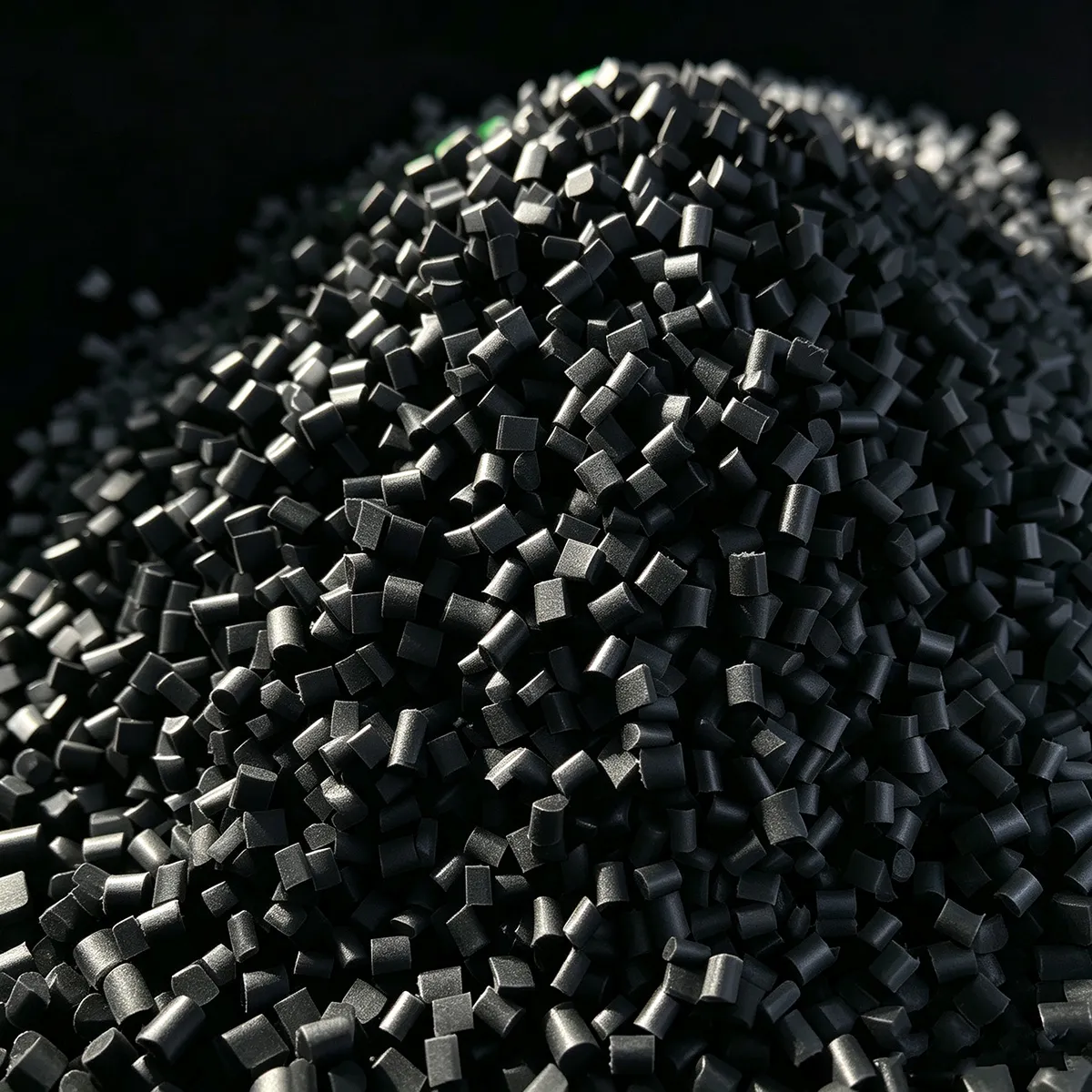
PA6 ETF01 · Toughened Heat-Stabilized PA6 GF30
Same CuI/KI + amine AO heat package as ETF02 but blended with elastomer modifier for 28 kJ/m² notched Izod. Ideal for snap-fit lamp housings subject to cold impact.
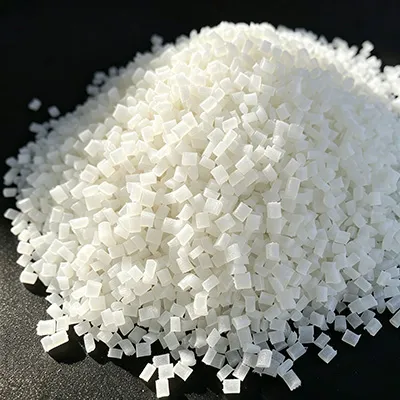
PA66 BFE04 · PA66 GF30 Higher Heat
PA66 base with 30% GF and HDT 250°C for even hotter underhood zones near turbo manifolds (220°C peak) beyond ETF02's 210°C HDT limit.
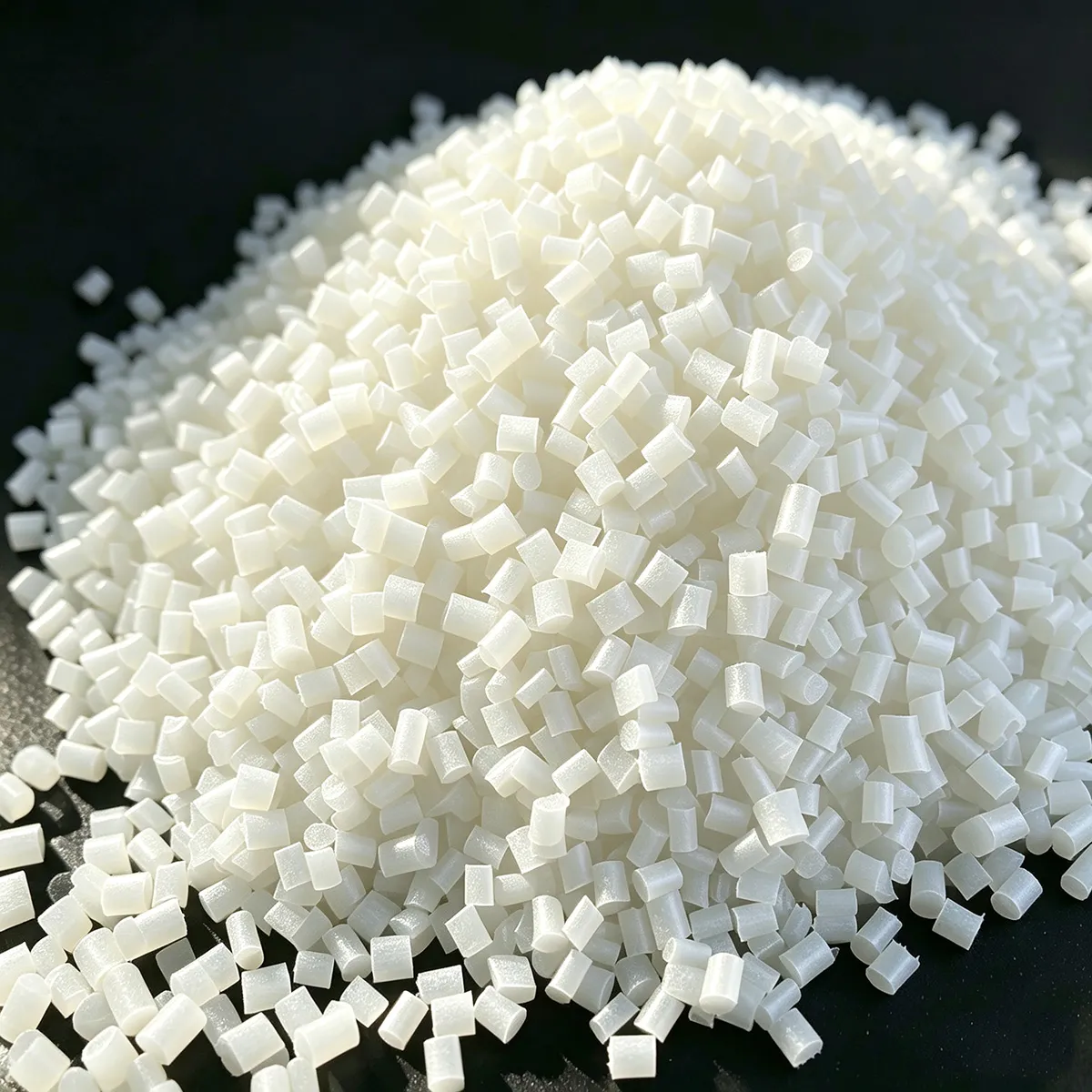
PA6 BFE01 · Premium General-Purpose PA6 GF30
Standard premium 30% GF PA6 without the CuI/KI heat package. Use this Standard-tier grade when max continuous temp stays below 110°C and no heat-aging requirement exists.