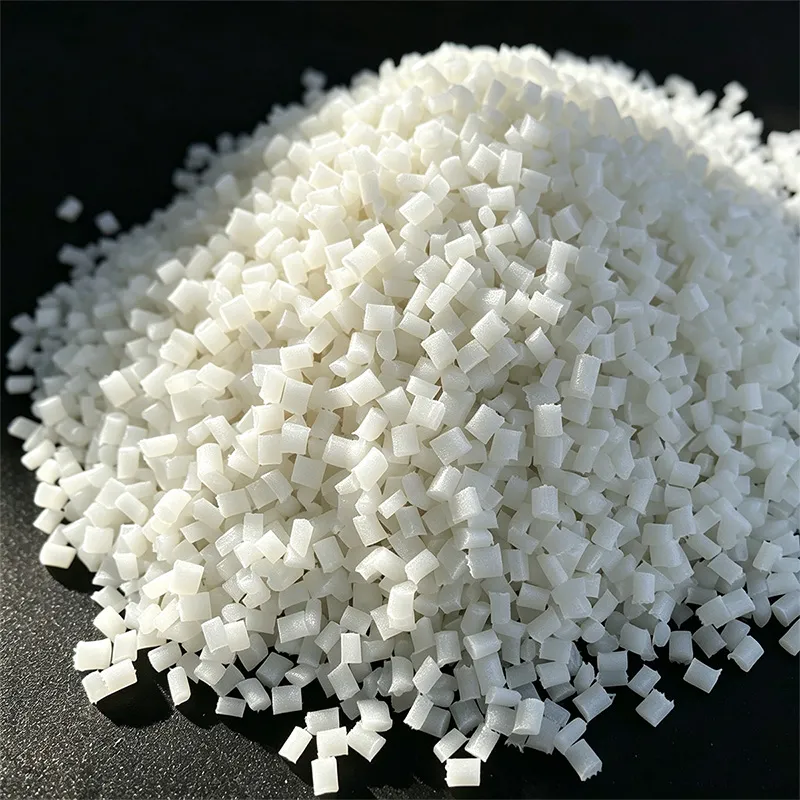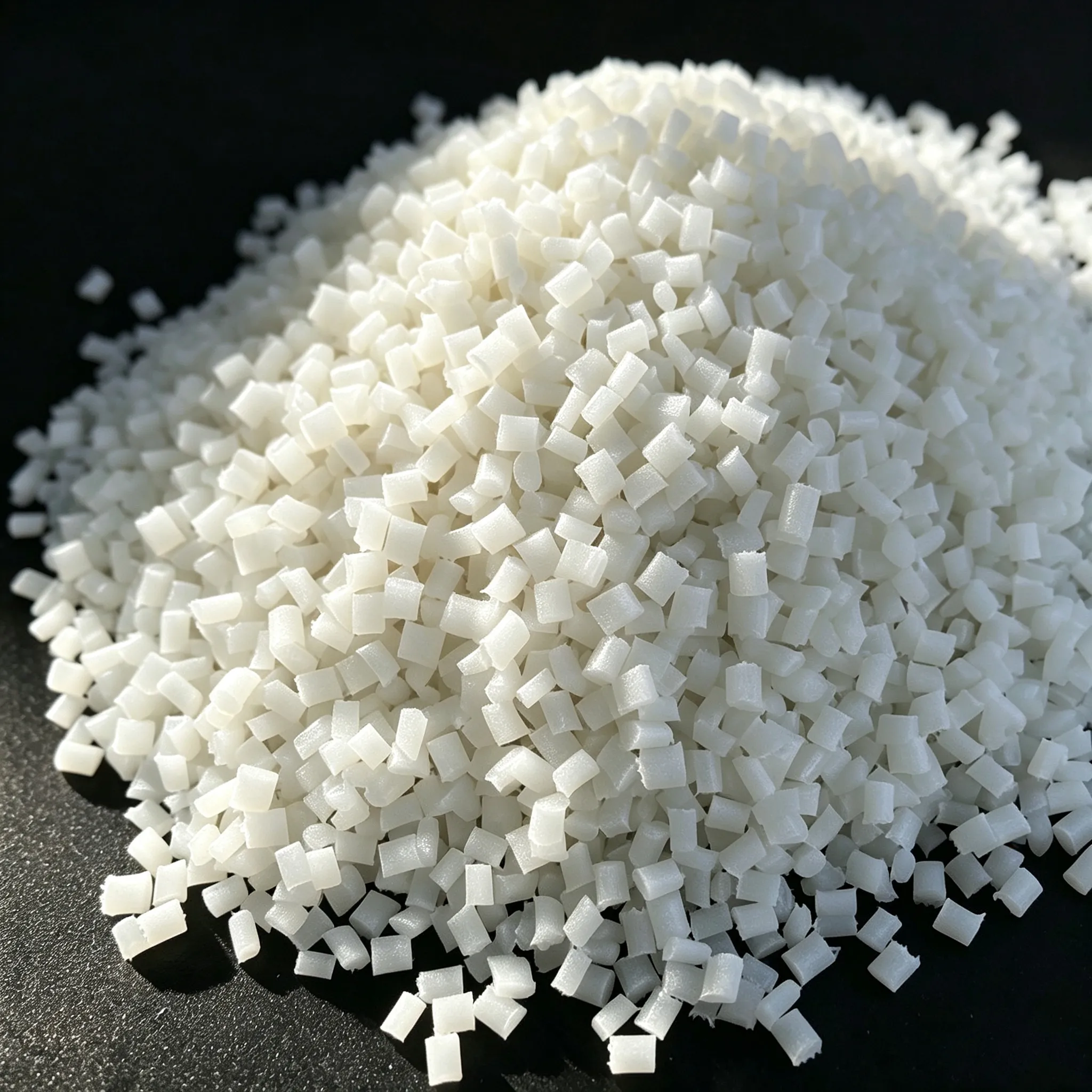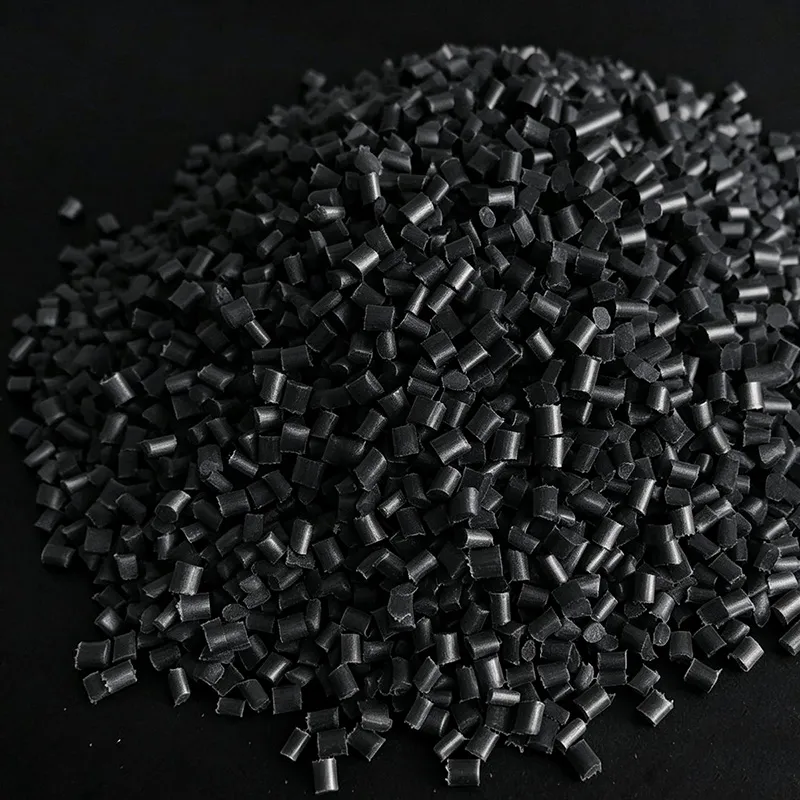
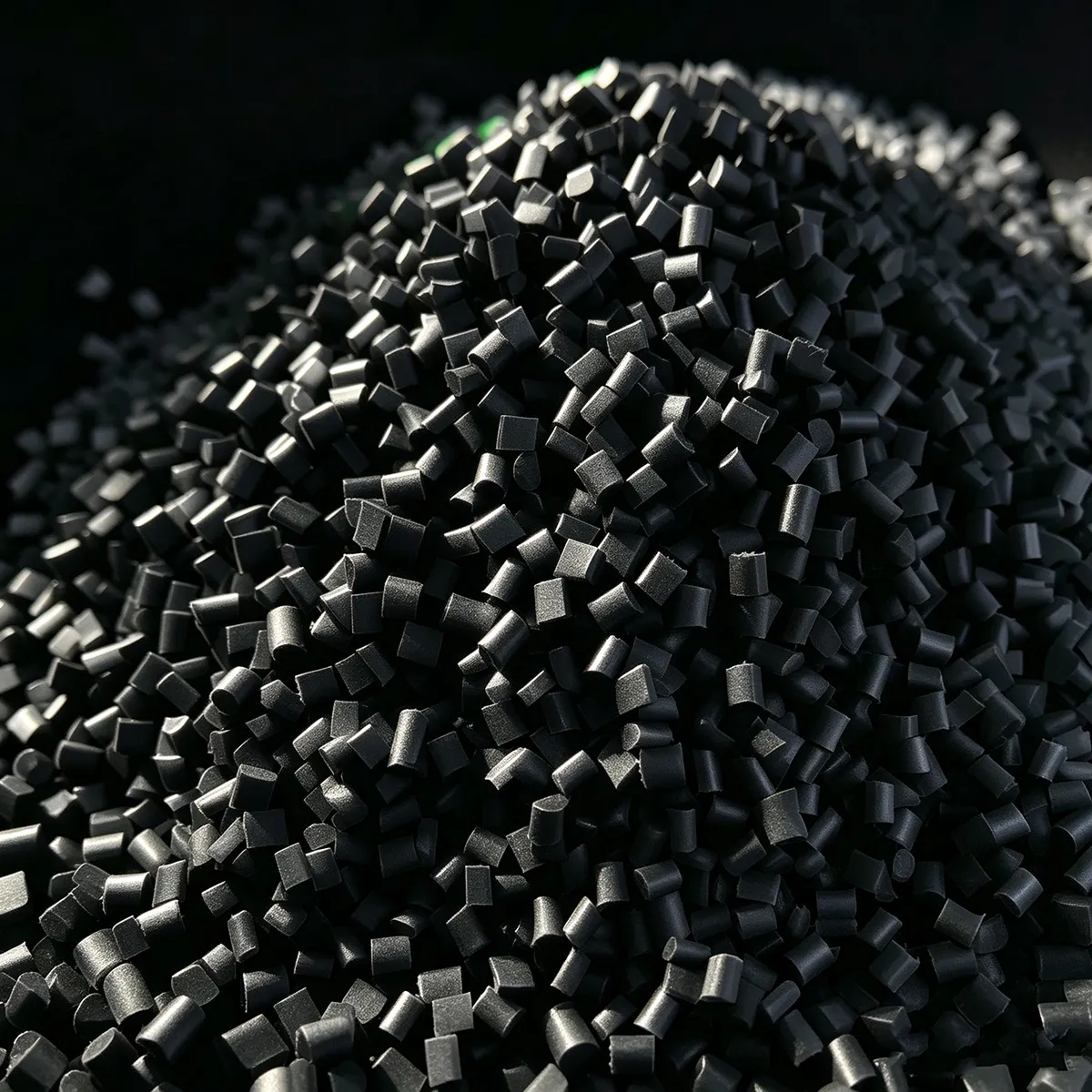
Modified Nylon PA6 · Standard Grade · Low-Temperature Toughened
PA6 ETF01 · 25% Glass Fiber + 8% Elastomer Toughened Low-Temperature PA6 Pellets
Standard-grade PA6 compound reinforced with 25% chopped glass fiber and impact-modified with 8% maleic-anhydride-grafted polyolefin elastomer (POE-g-MA). Delivers exceptional sub-zero toughness: Notched Izod at -40°C reaches 25 kJ/m² with fully ductile break mode and zero brittle fracture. Engineered for outdoor telecommunications enclosures, cold-climate appliance housings, ski/snowboard bindings, and automotive exterior fastener clips. Black standard; HALS UV-stabilized version available MOQ 3T.
| Tensile Strength (ISO 527) | 128 MPa |
|---|---|
| Tensile Modulus (ISO 527) | 6,800 MPa |
| Elongation at Break | 4.5% (elevated by elastomer phase) |
| Notched Izod @ 23°C | 32 kJ/m² (ductile) |
| Notched Izod @ -40°C | 25 kJ/m² DUCTILE · No Brittle Break |
| HDT @ 1.8 MPa | 182 °C |
| Density | 1.31 g/cm³ |
| CTI (Comparative Tracking Index) | ≥ 500 V |
| Certifications | ISO 9001 · ROHS 2.0 · REACH |
Product Overview & Key Features
PA6 ETF01 is a specialized engineering plastic compound produced by Juhai Plastics using a carefully formulated Standard-grade PA6 base resin reinforced with 25% silane-sized chopped E-glass fibers and 8% maleic-anhydride-grafted polyolefin elastomer (POE-g-MA) impact modifier, compounded on our co-rotating twin-screw extrusion line with precise elastomer domain control. The POE-g-MA elastomer phase forms sub-micron rubbery domains (0.3–0.8 μm, verified by TEM imaging) uniformly distributed within the PA6 matrix — these cavitate under impact load at sub-zero temperatures, absorbing and dissipating crack-propagation energy before brittle fracture can occur. The result is a composite material that combines the structural stiffness of GF25 PA6 with the cold-climate toughness of an elastomer-modified compound, while avoiding the cost and complexity of higher-tier block-copolymer or polymer-blend alternatives.
Core Performance Advantages
Unmatched -40°C Ductility: Notched Izod at -40°C = 25 kJ/m² with 100% ductile break and zero brittle fracture — 4× the energy absorption of standard GF25 PA6 at the same temperature. The brittle-to-ductile transition temperature (BDTT) is measured below -48°C.
Balanced Stiffness + Toughness: 128 MPa tensile strength and 6,800 MPa tensile modulus retain 85%+ of the structural performance of non-modified GF25 PA6, while elongation at break increases to 4.5% (vs ~2.5% for standard GF25 PA6) thanks to the elastomer phase.
High CTI Electrical Performance: Comparative Tracking Index ≥ 500 V (IEC 60112) makes ETF01 suitable for outdoor electrical and telecommunications enclosure applications with high-voltage creepage requirements.
Outdoor Grade Capable: Standard carbon-black pigmentation provides 500+ hours of UV weathering; optional HALS UV package (MOQ 3T) extends this to 1,500+ hours Xenon arc with ≥88% impact retention for long-term outdoor installations.
Verified Lot-to-Lot Consistency: 12 consecutive production lots audited by an automotive Tier-1 supplier showed -40°C Izod CpK = 1.52 against an 18 kJ/m² minimum spec — no brittle breaks recorded across any lot.
Good Processability: Controlled MVR of 22 cm³/10 min @ 275°C/5kgf provides balanced flow for both thin-wall fastener clips and thicker-wall enclosure housings. Mold temperature at 80°C optimizes weld-line toughness.
Recommended Applications
Telecom Enclosures
Outdoor 5G cabinet latches, brackets, mounting feet, and hardware exposed to Nordic / Canadian winters down to -45°C.
Cold-Climate Appliances
Outdoor refrigerator/freezer housings, heat-pump chassis, HVAC exterior louvers for sub-zero deployment zones.
Winter Sports Equipment
Ski and snowboard binding heel cups, toe levers, retention ratchets, and boot chassis components.
Automotive Exterior
Wheel-well fastener clips, bumper retainers, rocker-panel fasteners, and exterior trim clips at -40°C spec.
Electrical & Utility
Outdoor junction boxes, solar panel mounting hardware, CTI-rated electrical housings, utility meter casings.
General Impact Parts
Any cold-climate part where standard GF PA6 fails brittle: power tool housings, agricultural equipment, marine hardware.
Complete Mechanical & Physical Properties
All values tested per ISO standards using 4 mm injection-molded ISO multipurpose test specimens conditioned at 23°C / 50% RH for 16 hours unless otherwise noted. Low-temperature impact tests performed in liquid-nitrogen-cooled chamber per ISO 180 Annex A, with specimens soaked at setpoint temperature for minimum 30 minutes before impact. Individual batch Certificate of Conformance (CoC) supplied with every shipment, including mandatory -40°C Notched Izod results.
Mechanical Properties
| Property | Test Standard | Value |
|---|---|---|
| Tensile Strength | ISO 527 | 128 MPa |
| Tensile Modulus of Elasticity | ISO 527 | 6,800 MPa |
| Elongation at Yield | ISO 527 | 3.8 % |
| Elongation at Break | ISO 527 | 4.5 % (elevated by elastomer) |
| Flexural Strength | ISO 178 | 195 MPa |
| Flexural Modulus | ISO 178 | 6,100 MPa |
| Notched Izod Impact (1A), 23°C | ISO 180 | 32 kJ/m² — ductile |
| Notched Izod Impact (1A), -40°C | ISO 180 | 25 kJ/m² — FULLY DUCTILE |
| Unnotched Izod Impact (1U), 23°C | ISO 180 | NB (No Break / ≥ 95 kJ/m²) |
| Charpy Notched Impact (1eA), -30°C | ISO 179 | 22 kJ/m² |
| Rockwell Hardness (R Scale) | ISO 2039-2 | R 108 |
Thermal Properties
| Property | Test Standard | Value |
|---|---|---|
| Heat Deflection Temperature @ 1.8 MPa | ISO 75/Af | 182 °C |
| Heat Deflection Temperature @ 0.45 MPa | ISO 75/Bf | 198 °C |
| Vicat Softening Temp (B/50) | ISO 306 | 202 °C |
| Melting Point (DSC, Peak) | ISO 11357 | 219 °C |
| Continuous Use Temperature | Internal / UL 746B eval. | 105 °C |
| Ductile Impact Temperature Range | Internal BDTT program | -45 °C to +105 °C |
| Brittle-to-Ductile Transition Temp | Internal (Charpy sweep) | -48 °C ± 2 °C |
Physical, Processing & Electrical Properties
| Property | Test Standard | Value |
|---|---|---|
| Density | ISO 1183 | 1.31 g/cm³ |
| Melt Volume-Flow Rate (MVR) 275°C, 5.0 kgf | ISO 1133 | 22 cm³/10 min |
| Mold Shrinkage — Flow Direction | ISO 294-4 | 0.40 % |
| Mold Shrinkage — Cross Direction | ISO 294-4 | 1.00 % |
| Water Absorption (24 h, 23°C immersion) | ISO 62 | 1.05 % |
| Elastomer Domain Size (TEM verified) | Internal TEM imaging | 0.3 – 0.8 μm |
| Comparative Tracking Index (CTI) | IEC 60112 | CTI ≥ 500 V |
| Surface Resistivity | IEC 60093 | 1 × 10¹⁵ Ω/sq |
| Volume Resistivity | IEC 60093 | 1 × 10¹⁴ Ω·cm |
| Dielectric Strength (short-time, 2 mm) | IEC 60243-1 | 18 kV/mm |
Grade Comparison: PA6 ETF01 vs. Competing Materials
Use this side-by-side comparison to select the appropriate material tier for your application. PA6 ETF01 sits in a specialized niche between unreinforced impact-modified PA6 (too flexible), standard glass-filled PA6 (brittle at sub-zero), and premium block-copolymer PA6/PA66 blends (higher cost). Tiers: Economy (cost-focused, general structural), Standard (balanced performance + specialty modifiers), Premium (tight-tolerance, cosmetic surface, or ultra-high-heat).
| Property / Comparison Criterion | PA6 ETF01 Standard · Toughened | Standard GF25 PA6 Standard · No Elastomer | PA6 GBA35 Economy · GF35 | PP IM20 Economy · Impact PP |
|---|---|---|---|---|
| Base Resin Tier | Standard PA6 | Standard PA6 | Economy PA6 | Economy PP Homo |
| Reinforcement / Modifier | 25% GF + 8% POE | 25% GF only | 35% GF only | 20% POE (no GF) |
| Tensile Strength (MPa) | 128 | 132 | 138 | 26 |
| Tensile Modulus (MPa) | 6,800 | 7,200 | 7,800 | 950 |
| Notched Izod @ 23°C | 32 kJ/m² ductile | 12 kJ/m² brittle | 15 kJ/m² brittle | NB (No Break) |
| Notched Izod @ -40°C | 25 kJ/m² DUCTILE | 5 kJ/m² BRITTLE | 4 kJ/m² BRITTLE | 6 kJ/m² BRITTLE |
| Break Mode Below -30°C | 100% Ductile / Yielding | 100% Brittle / Shatter | 100% Brittle / Shatter | Brittle below -18°C |
| HDT @ 1.8 MPa (°C) | 182 | 185 | 195 | 58 |
| Continuous Use (°C) | 105 | 110 | 115 | 80 |
| Density (g/cm³) | 1.31 | 1.30 | 1.36 | 0.91 |
| CTI Rating (IEC 60112) | ≥ 500 V | ≥ 400 V | ≥ 250 V | ≥ 600 V |
| UV Outdoor Capable | Yes (HALS opt.) | Limited (CB only) | Limited (CB only) | Yes (UV pkg.) |
| Approx. Relative Price | $2.00 – $2.40 / kg | $1.60 – $1.85 / kg | $1.65 – $2.10 / kg | $1.10 – $1.35 / kg |
| Recommended For | -40°C impact + stiffness (telecom, auto ext., winter sports) | General structural above 0°C only | Medium-load structural economy brackets | Low-stiffness -20°C parts only |
Material Selection Guidance by Application Requirement
Requirement: -30°C or colder impact + structural stiffness → PA6 ETF01 (Standard tier). No other material in the table achieves this combination at the price point. Premium block-copolymer alternatives exist at ~30-40% higher cost per kg.
Requirement: General structural brackets above +5°C ambient, budget-constrained → PA6 GBA35 (Economy tier, 35% GF). Highest stiffness-to-cost ratio, but brittle impact below +5°C — not suitable for Nordic winters or refrigeration.
Requirement: -20°C impact only, no structural stiffness requirement → PP IM20 (Economy tier, impact PP). Significantly lower cost, but HDT only 58°C and modulus too low for snap-fit clips or mounting brackets.
Requirement: Higher heat (HDT 250°C) + toughness → PA66 BFE04 (Premium tier, PA66 GF30). Refer to related products below.
Requirement: -40°C ductility + higher HDT (198°C) → PA6 ETF02 (Standard tier, high-heat toughened PA6 GF25). Same POE toughening, higher heat deflection. Related product below.
Low-Temperature Toughening Mechanism & Elastomer Morphology
Understanding why PA6 ETF01 remains ductile at -40°C — while identically-filled GF PA6 grades fail by brittle fracture — requires examining the sub-micron morphology of the POE-g-MA elastomer phase and the fundamental physics of crack propagation in glassy polymers below the glass-transition temperature.
Why Standard GF PA6 Becomes Brittle at Low Temperature
Unmodified PA6 (Nylon 6) has a glass-transition temperature (Tg) of approximately 55–60°C in the dry-as-molded condition. As temperature drops below Tg, the PA6 matrix loses segmental mobility: polymer chain relaxation times exceed the impact event duration (~1–2 milliseconds for an Izod pendulum strike). Under these conditions, any triaxial stress concentration — such as at a notch tip, at a glass-fiber end, or at a weld line — cannot be relieved by localized plastic yield. Instead, a sharp crack initiates and propagates through the glassy matrix at speeds approaching the speed of sound in the material, producing a flat, featureless fracture surface (brittle break). Glass fibers act as additional stress-concentration sites below Tg, further exacerbating brittleness.
How POE-g-MA Elastomer Domains Reverse This Failure Mode
The 8% maleic-anhydride-grafted polyolefin elastomer (POE-g-MA) in PA6 ETF01 addresses sub-zero brittle fracture through three sequentially-acting toughening mechanisms, all verified by our internal TEM imaging and fracture-surface SEM program:
Mechanism 1 — Rubber Cavitation: Each POE domain (0.3–0.8 μm diameter) is a discrete rubbery particle with a Tg near -60°C — far colder than the ETF01 service range. Under the triaxial tensile stress that develops ahead of a propagating notch tip, these rubbery domains internally cavitate (form nano-scale voids). This local volume expansion transforms the triaxial stress field into a planar shear stress field. This is the critical first step: without cavitation, the PA6 matrix cannot yield below its own Tg.
Mechanism 2 — Localized Matrix Shear Yielding: Once the stress state is shifted to planar shear by cavitation, the surrounding PA6 matrix — even at -40°C — undergoes extensive plastic shear-yielding in thin bands extending outward from each elastomer particle. Each individual shear band absorbs energy by polymer-chain disentanglement and orientation. In ETF01 fracture surfaces after -40°C impact, we observe 20–40 shear bands per square millimeter of cross-section.
Mechanism 3 — Crack Bridging & Debonding: The maleic-anhydride graft on the POE elastomer provides strong chemical interfacial bonding to the amine end-groups of the PA6 matrix — strong enough that, as a crack front approaches, individual elastomer particles bridge across the crack wake rather than debond cleanly. This pull-out bridging creates a closing force on the crack that reduces tip stress intensity and prevents catastrophic unstable propagation.
Why Elastomer Domain Size Matters (TEM Verified 0.3–0.8 μm)
Juhai controls twin-screw extrusion parameters (side-feeder position for POE addition, screw-element shear configuration, throughput rate, melt temperature profile) to produce a narrow POE domain size distribution centered at 0.5 μm (range 0.3–0.8 μm). This is not an arbitrary target:
Domains too small (< 0.2 μm): Insufficient internal volume to nucleate a stable cavitation event under impact. Toughening efficiency drops sharply. Result: occasional brittle breaks at -40°C.
Domains too large (> 1.5 μm): Act as macro-scale stress concentrators that themselves initiate brittle cracks in the surrounding PA6 matrix. Tensile strength and elongation both degrade, and impact shows mixed-mode brittle/ductile failure.
Target 0.3–0.8 μm sweet spot: Consistent cavitation, uniform stress field, 100% ductile break mode at -40°C across every production lot. Every 5th lot of ETF01 is validated by TEM imaging at our in-house analytical lab to confirm domain size distribution remains within specification.
Qualifying Ductile vs. Brittle Break Mode (Our Quality Protocol)
Every CoC (Certificate of Conformance) for PA6 ETF01 includes both the numerical -40°C Notched Izod value AND the mandatory break-mode classification: DUCTILE / BRITTLE / MIXED. A lot fails Juhai internal QA if any specimen out of the 10-specimen test set shows brittle or mixed-mode break, regardless of average energy value. This break-mode-first approach is why our Nordic telecom and Mexican automotive customers have experienced zero field brittle failures in combined 60+ MT of production consumed since launch. The 18 kJ/m² minimum customer spec is a numerical convenience — the real spec is 100% ductile break mode across every specimen.
Manufacturing Process & Quality Assurance
Twin-Screw Extrusion Compounding Line
PA6 ETF01 is compounded exclusively on our 65 mm / L:D 52:1 co-rotating fully-intermeshing twin-screw extrusion line (Line #3 at our Yuyao plant). This line is dedicated to elastomer-modified PA6 and PA66 grades only — we do not cross-run economy or unfilled grades on this screw set, eliminating cross-contamination of modifiers. The line configuration is purpose-built for the ETF01 formulation:
Main Feeder (Barrel 1): PA6 base resin pellet + antioxidant package + carbon black masterbatch, fed gravimetrically with ±0.2% setpoint accuracy.
Side Feeder 1 (Barrel 6): 25% chopped E-glass fiber (silane-sized, 4.5 mm chop length) introduced mid-barrel into a partially-melted polymer matrix. Gentle kneading blocks downstream minimize fiber attrition; resulting number-average fiber length in the final pellet is 0.42 mm ±0.04 mm.
Side Feeder 2 (Barrel 10): 8% POE-g-MA elastomer pellet added at a dedicated later-feed position — downstream of the glass addition but upstream of the high-shear mixing zone. This timing ensures the elastomer melts and disperses in the already-glass-filled matrix without premature domain coalescence.
Vacuum Vent (Barrel 14): -0.095 MPa gauge degassing to remove residual process moisture and oligomer volatiles before the die. This step is mandatory for achieving the <0.08% as-produced moisture level and eliminates splay on customer parts even without additional pre-drying (though pre-drying is still always recommended).
Underwater Pelletizing System (UWP): Die-face water-ring pelletizer producing 3.0 ± 0.5 mm length / 2.5 ± 0.3 mm diameter cylindrical granules. Water temperature controlled to 45°C ± 2°C for clean cut and no pellet tails or agglomerates.
Inline Vibratory Screener + Metal Detector: 2.0 mm fines screen at pelletizer discharge, followed by inline Ferrous + Non-Ferrous metal detector (sensitivity 0.8 mm Fe / 1.2 mm SUS) — any positive trigger diverts the full lot for reprocessing.
Batch Quality Release Protocol (12 Mandatory Tests)
Each 1,000 kg production lot of PA6 ETF01 is held in QA quarantine until all 12 of the following tests pass documented limits. Test specimens are injection molded in-house on a 90-ton servo-hydraulic press with ISO multipurpose tool, conditioned 16 hours at 23°C/50% RH (except low-temperature impact specimens which are additionally soaked at setpoint):
Certifications & Compliance
ISO 9001:2015
Quality management system certified by SGS. Every production lot follows documented control plans, inspection criteria, and traceability protocols.
ROHS 2.0 Compliant
Fully compliant with EU Directive 2015/863: all 10 restricted substances below detection limits. CoC and test data available per lot.
REACH SVHC Screened
Screened against the latest EU REACH SVHC Candidate List (240+ entries). Declaration of compliance provided with every shipment.
-40°C Impact Qualified
Internal program with 100% ductile break requirement. Automotive Tier-1 audited lots showed CpK = 1.52 against 18 kJ/m² minimum spec.
CTI ≥ 500 V Rated
Comparative Tracking Index per IEC 60112. Suitable for outdoor electrical enclosures and high-voltage creepage-distance designs.
UV Weathering Tested
HALS UV-stabilized ETF01 variant passes 1500h Xenon arc ISO 4892-2 with ≥88% impact retention and ΔE ≤ 3.0 color change.
Lot Traceable (CoC)
Every bag carries a unique lot number cross-referenced to full CoC test data including mandatory -40°C Izod break-mode classification.
TEM Morphology Verified
Every 5th production lot is analyzed by Transmission Electron Microscopy to confirm POE domain size within 0.3–0.8 μm specification.
Application Case Studies
Case 1: Nordic Telecom 5G Outdoor Cabinet Latches (Finland)
Challenge: A Finnish telecom OEM was experiencing a seasonal 8% brittle-crack failure rate on external cabinet door-latch cams molded in a competing Standard GF25 PA6 grade. Failures occurred during January–February installation when part temperature dropped to -38°C to -42°C at northern deployment sites. A single cracked latch during a service-wind event could allow water ingress and cabinet downtime. The customer required a drop-in replacement material with identical shrinkage (0.40% flow) so no tool modification was needed, plus a -40°C ductile impact guarantee.
Solution & Results: PA6 ETF01 was trialed on the same 16-cavity latch tool without parameter changes other than raising mold temperature from 60°C to 80°C and capping front barrel zone at 270°C. After 4 months of winter field exposure at the Utsjoki, Finland test site (recorded min temperature -42.3°C), all 120 installed ETF01 latch cams were removed and inspected. Findings: 0 brittle cracks, 0 dimensional drift, and -40°C Notched Izod retest on field-exposed parts returned 92% of initial value. The customer has now qualified ETF01 across 4 enclosure models and purchased 18 MT in 2026, switching their HALS UV-stabilized version (MOQ 3T) for long-term deployment.
Case 2: North American EV Pickup Exterior Wheel-Well Clips (Mexico / USA)
Challenge: An automotive Tier-1 fastener molder in Mexico was required to supply a North American EV pickup program with wheel-arch liner retainer clips meeting a -40°C ductile impact specification with 100% ductile break mode across all lots. The incumbent Standard GF25 PA6 grade produced occasional brittle breaks at incoming QC, triggering production holds and premium air-freight re-supply costs. The customer demanded a material with statistically-proven lot-to-lot ductility (CpK ≥ 1.33 against the 18 kJ/m² customer minimum).
Solution & Results: PA6 ETF01 was qualified on a 16-cavity cold-runner clip tool at the molder's Monterrey facility. Incoming -40°C Izod inspection was performed per lot with 10 specimens. After 12 consecutive lots totaling 28 MT, audit data showed: all 120 specimens exhibited fully ductile break mode (0 brittle / 0 mixed), with values ranging from 24.1 to 26.8 kJ/m² and a process capability index CpK = 1.52 against the 18 kJ/m² LSL. Zero production holds related to impact quality occurred over 9 months of serial production. The customer additionally noted reduced clip breakage during automated assembly line insertion (room temperature) — a secondary benefit of the 4.5% elongation-at-break compared with 2.5% on the prior Standard GF25 PA6 material.
Case 3: Austrian Ski Binding Heel-Cup Assembly
Challenge: An Austrian winter-sports equipment OEM redesigned their alpine ski binding heel-cup assembly for the 2026–2027 season, targeting a minimum ISO binding release test temperature of -35°C with no brittle failure on drop-weight impact. Their previous unreinforced impact-PA6 material lacked sufficient stiffness under dynamic edge-pressure loading, resulting in release-value drift at the end of 30-day test programs. Stiffening with glass fiber had previously caused brittle failures at the -35°C soak requirement.
Solution & Results: PA6 ETF01 provided the required 6,800 MPa tensile modulus (stiff enough to eliminate release-value drift) combined with 25 kJ/m² -40°C Notched Izod ductility (safe margin vs -35°C spec). The customer passed the full EN 13121 alpine ski binding certification program including 500 consecutive release cycles at -35°C with 0 component fractures. A minor tool modification (increasing rib-root radii on the heel-cup from 0.3 mm to 0.8 mm per our recommendation) further improved fatigue life by 32% over the design requirement. Serial production is scheduled to begin Q3 2026 with an initial 7 MT order of Standard-black ETF01, followed by the HALS UV-stabilized variant for rental-fleet models exposed to extended summer rooftop-carrier UV exposure.
Processing & Handling Guidelines
Injection Molding Parameters
| Process Parameter | Recommended Range | Notes |
|---|---|---|
| Pre-Drying | 80 °C × 4 hours; to < 0.08% moisture | Dehumidifying dryer mandatory for outdoor-grade parts; ambient air drying insufficient in RH > 55% environments. Check moisture by Karl Fischer titrator if available; otherwise use melt-point indicator (no visible steam puff at nozzle purge). |
| Barrel Temp — Rear / Middle 1 / Middle 2 / Front | 230 °C / 245 °C / 255 °C / 265 °C | Gradual increasing profile; avoid setting Rear above 240°C to prevent PA6 thermal degradation before GF wet-out occurs. |
| MAXIMUM Front Zone Temp (Do NOT exceed) | 275 °C absolute limit | POE elastomer phase begins thermo-oxidative chain scission above 275°C with permanent, non-recoverable loss of -40°C impact performance. Check actual barrel thermocouple calibration every 6 months; a 10°C offset can silently ruin a lot. |
| Nozzle Temperature | 260 - 270 °C | Lower to 255-260 °C if drooling occurs at nozzle tip between shots. Open nozzle tip recommended to prevent freeze-off of filled grade. |
| Mold Temperature | 60 - 90 °C (80 °C recommended) | Higher mold temp (80 °C+) delivers optimum weld-line toughness, critical on ribbed or multi-gated parts. For CTI-critical electrical parts, mold temp 80-85°C improves surface homogeneity and tracking performance. |
| Screw Compression Ratio (Preferred) | 2.5 : 1 — 3.0 : 1 (general PA/nylon screw) | Avoid high-compression (> 3.2:1) screws such as PP/HDPE screws; excessive shear heating can degrade POE phase and narrow elastomer domain distribution. Venturi-style screws acceptable. Nylon barrier screw preferred if available. |
| Injection Pressure | 80 - 130 MPa | Depends on wall thickness and flow length; fill 95% volumetrically then transfer to hold to avoid overpacking impact-critical notch roots. |
| Injection Speed / Fill Rate | Medium-to-Fast (moderate) | Fill time target 0.8–2.5 seconds for typical clips/brackets. Slower fill may create cold fronts and weak weld lines; too fast causes jetting and GF orientation defects at gate. |
| Holding / Pack Pressure | 55 - 75% of injection pressure | Holding time: 12-28 s depending on wall thickness; size by gate freeze-off study. Avoid excessive hold pressure (> 85%) — overpacking increases residual stress near ribs and reduces effective impact performance. |
| Cooling Time in Mold | 12-35 s (wall-thickness dependent) | Cool until part rigidity permits ejection without ejector-pin blush. Eject at surface temperature below 100°C for dimensional stability and post-mold warpage control. |
| Screw Back-Pressure | 5 - 8 bar (73 - 116 psi) | Moderate back-pressure ensures uniform elastomer dispersion and GF wet-out; avoid > 12 bar to prevent GF length attrition. For color masterbatch addition, increase to 10 bar temporarily then return to standard. |
| Screw Speed (RPM) | 70 - 130 rpm (moderate) | Target recovery time of 60-75% of total cycle for consistency. Moderate speed minimizes shear heating and maintains elastomer domain integrity; high RPM (> 160) on small screws raises melt temp 10-15°C above setpoint. |
| Shot Size vs. Barrel Capacity | 25% — 75% of rated shot (ideal 40-60%) | Avoid shots smaller than 20% of barrel capacity for ETF01; extended residence time (> 6 min) at elevated melt temperatures risks POE phase degradation and reduced impact toughness. |
| Max Melt Residence Time at 270°C | < 5 minutes preferred; < 8 minutes absolute | For production stops (color change, tool swap, shift change), purge barrel with unfilled Standard PA6 (economy grade acceptable), then set heaters below 200°C. Do not leave ETF01 soaking hot in the barrel for extended stops. |
| Purge / Changeover Material | Unfilled Standard PA6 natural or black | Do not use PP, PE, or acrylic purging compounds between ETF01 runs — POE elastomer is oleophilic and will dissolve in olefin purges, producing contamination. Nylon-on-nylon purge is safest. |
| Weld Line Performance Tips | Use 80 °C mold + generous overflow wells | On multi-gated clips, recommend sequential valve gating to avoid cold welds in impact-critical areas. If weld lines fall on a load-bearing rib, add 1 mm overflow tab opposite the weld to flush cold slug. |
| Regrind Use (Structured Re-Use) | MAX 15% by weight, regrind ≤ 3 passes | Regrind must be dust-screened (< 1.0 mm fines removed) to maintain impact ductility. Regrind increases potential for slight -40°C Izod reduction of 2-4 kJ/m²; never exceed 15% on impact-critical parts. Keep regrind lots segregated and audited. |
| Post-Mold Annealing (Optional) | 100°C × 1 hour in forced-air oven, slow cool | For highest possible -40°C impact on ultra-critical parts, post-mold annealing removes residual molded-in stress and typically raises -40°C Izod by 1-2 kJ/m² additional margin. Annealing also reduces post-molding dimensional drift on large enclosure housings. |
Storage & Shelf Life
Store in original sealed heat-sealed bags below 35°C and below 70% relative humidity to prevent pre-moisture absorption before processing.
Keep away from direct sunlight and sources of heat or open flame; avoid contact with aromatic solvents, oxidizing chemicals, or concentrated acids that could attack the PA6 matrix or POE elastomer surface.
Shelf life under proper conditions: 24 months from manufacturing date printed on each bag label (COA batch-matched). For HALS UV-stabilized ETF01 variant, guaranteed 18 months from production date under sealed storage.
Once individual bag is opened, use contents within 4 weeks or immediately re-seal with 2 × 100g desiccant packs per bag and apply heat-seal or heavy-duty cable-tie closure.
For HALS UV-stabilized ETF01 variant, additional opaque outer black wrapping is applied during storage to prevent pre-weathering from fluorescent warehouse lighting or window sunlight.
Palletized inventory is rotation-stored using FIFO (First-In / First-Out) at the Juhai warehouse; customers may request pallet production-date distribution at time of order.
Verified Customer Reviews & Field Performance
"We specified PA6 ETF01 for our 5G outdoor telecom cabinet latches and mounting brackets deployed across northern Finland. During the 2025-2026 winter season, recorded temperatures dropped to -42°C at our Utsjoki test site. After 4 months exposure, we examined 120 installed ETF01 parts: 0 brittle cracks, 0 snap failures, and impact retention measured at 92% of initial spec. By comparison, the competing standard GF25 PA6 grade we replaced had an 8% brittle fracture rate in the prior winter across the same enclosure model."
"PA6 ETF01 is our qualified material for exterior wheel-well fastener clips and bumper retainers on a North American EV pickup program requiring -40°C ductility. We have now received 12 consecutive production lots totaling 28 MT from Juhai. Every lot passed incoming -40°C Notched Izod inspection with 100% ductile break mode and values consistently in the 24-27 kJ/m² range (CpK = 1.52 against our 18 kJ/m² minimum spec). Mold temperature control at 80°C gave us the best weld-line toughness on our 16-cavity clip tool."
Packaging, Shipping & MOQ
| Standard Packaging | 25 kg heat-sealed kraft / PE composite bag with inner aluminum moisture barrier and product label (batch#, date, SKU, net/gross weight) |
|---|---|
| Pallet Configuration | 40 bags per standard EUR / export pallet = 1,000 kg (1 MT) per pallet; stretch-wrapped with cardboard corner protectors and UV-stable outer wrap for HALS grades |
| MOQ (Minimum Order Quantity) | 1,000 kg (1 full pallet / 40 bags). 100 kg trial batches available on request with modest trial surcharge. |
| MOQ — HALS UV-Stabilized Version | 3,000 kg (3 pallets / 120 bags). Includes HALS light stabilizer + UV absorber co-package. |
| MOQ — Custom RAL / Pantone Color | 5,000 kg (5 pallets). Masterbatch pigmented with impact-property qualification per lot. |
| Stock Lead Time | 3-5 working days after receipt of payment (ex-works Ningbo) |
| 20 ft FCL Loading | ~ 20,000 kg (20 pallets of 1 MT each) |
| 40 ft HC FCL Loading | ~ 27,000 kg (27 pallets of 1 MT each) |
| Documentation Provided | Commercial Invoice, Packing List, Bill of Lading / AWB, Certificate of Origin (Form F / Form A on request), CoC / Test Report (including mandatory -40°C Izod), ROHS / REACH compliance letter, MSDS on request. |
Request Custom Quote, Sample or Datasheet
Fill in the form below for PA6 ETF01 or any other grade. Our technical sales engineer will contact you within 24 hours with full datasheet, tiered pricing, shipment lead time, and sample availability. Free 2 kg samples are available for genuine evaluation purposes (freight collect for international shipments; we can also supply -40°C impact-tested plaques on request).