Compounding Formulation · September 12, 2026 · Juhai R&D Center
PP GF30 Formulation Breakdown — Resin, Glass Fiber, PP-g-MAH Coupling & Additives
Polypropylene reinforced with 30% glass fiber is the lightweight champion of structural thermoplastics — density 1.13 g/cm³, water absorption under 0.01%, chemical resistance that PA6 can't match, and FDA food-contact compliance built in. But PP has a catch: it is non-polar, so it does not naturally bond to glass fiber. This article breaks down a real PP-GF30 formulation part by part, with special focus on the one ingredient that decides whether your compound reaches 95 MPa tensile or stalls at 75 MPa — maleic anhydride grafted PP (PP-g-MAH).
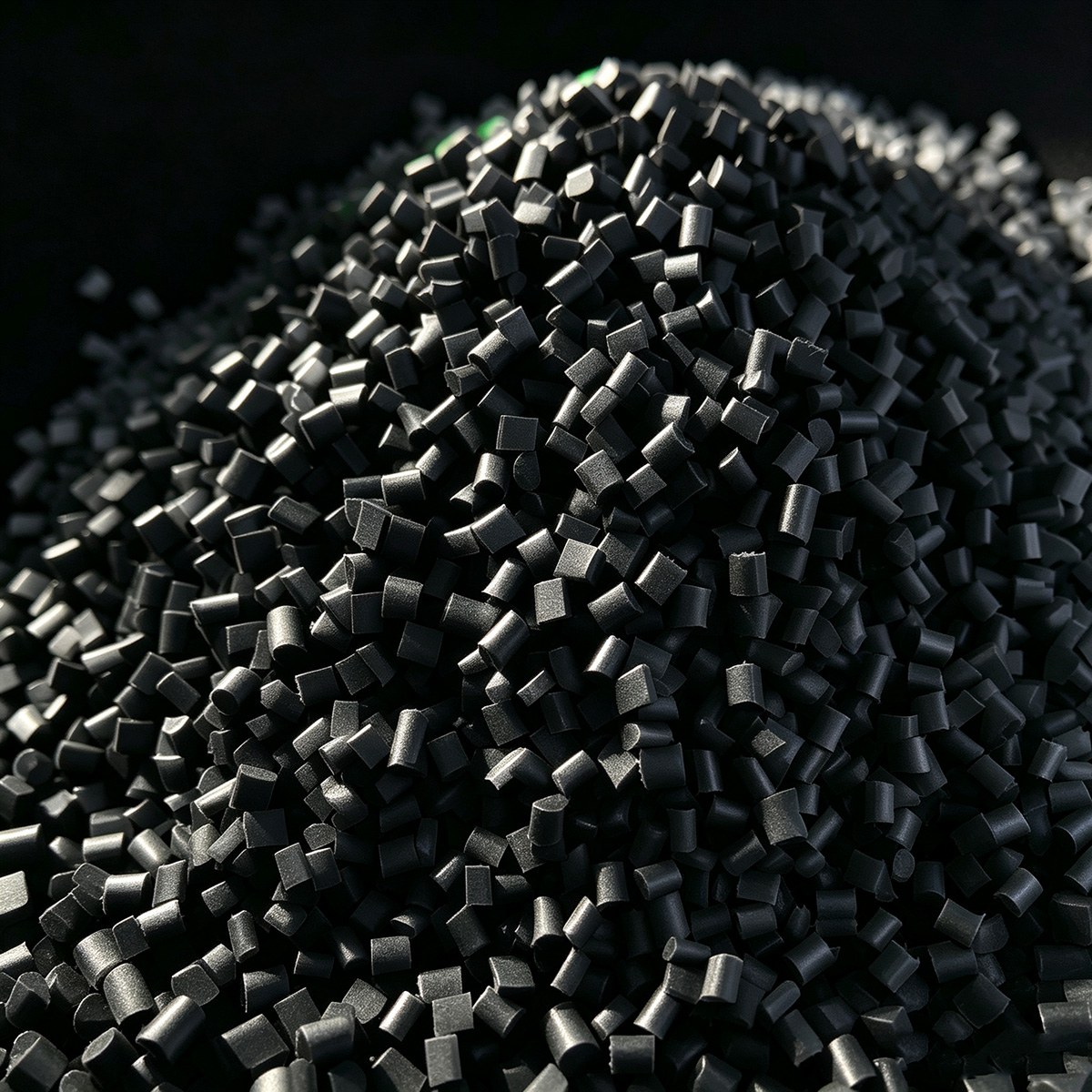
Table of Contents
1. What's Actually in a PP-GF30 Pellet
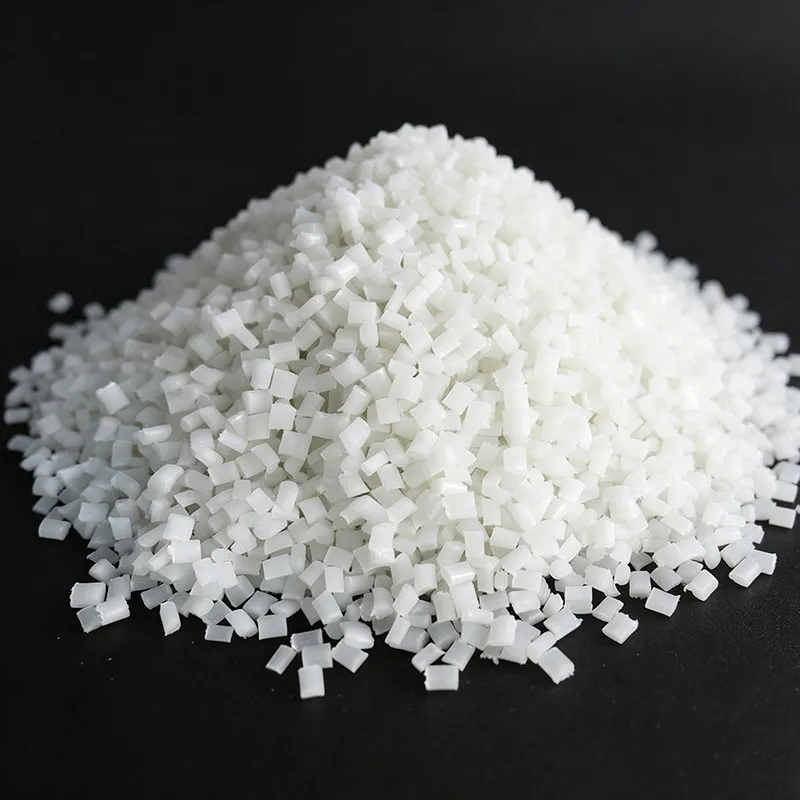
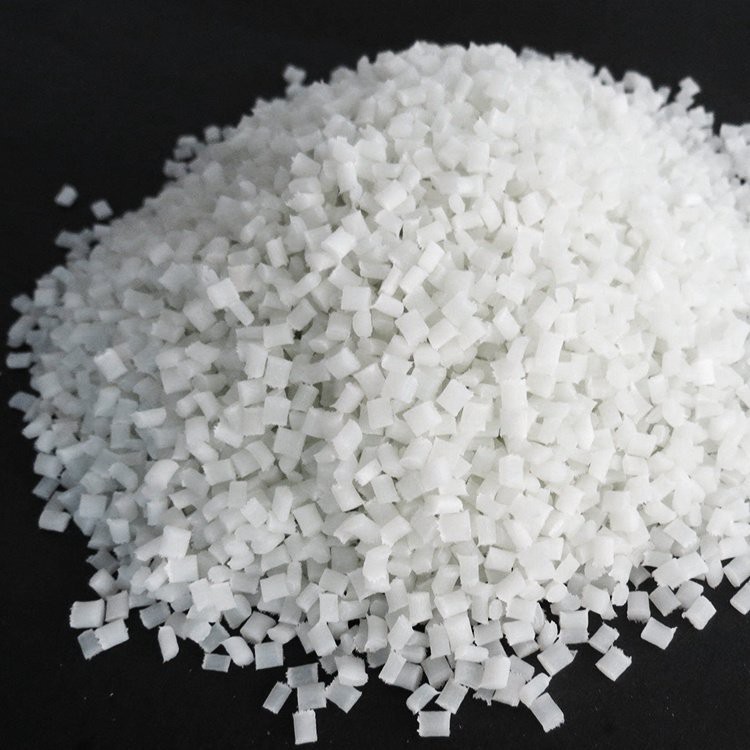
A 30% glass fiber PP pellet looks straightforward, but the 70% non-glass fraction carries the entire performance story. A production recipe on a twin-screw extruder typically looks like this:
| Component | Weight % | Role |
|---|---|---|
| PP base resin (homo- or copolymer) | ~63.0% | Matrix polymer — determines baseline strength, flow and impact |
| E-glass chopped strands | 30.0% | Primary reinforcement — stiffness, strength, HDT |
| PP-g-MAH coupling agent | 3.0 – 5.0% | Bonds non-polar PP matrix to the glass fiber surface |
| Heat stabilizer (phenolic + phosphite) | 0.3 – 0.5% | Prevents oxidative degradation during compounding & service |
| HALS UV stabilizer (optional) | 0.2 – 0.5% | Outdoor UV resistance for exterior parts |
| EBS lubricant | 0.2 – 0.3% | Mold release, reduced screw torque |
| Color masterbatch | 1.0 – 2.0% | Pigment dispersion |
The 3–5% PP-g-MAH is the most expensive additive per kg in the recipe, and the one most frequently under-dosed by cost-cutting compounders. Skip it or use less than 3%, and your tensile strength drops from ~95 MPa to ~75 MPa — the glass fiber becomes just a hard filler, not a reinforcement.
2. Base PP Resin — Homopolymer, Random Copolymer or ICP
Polypropylene is produced by polymerizing propylene with a Ziegler-Natta or metallocene catalyst. Three resin architectures are used in PP-GF compounding, and the choice is the first decision:
| Resin Type | MFR (g/10min) | Strength | Impact | Best For |
|---|---|---|---|---|
| Homopolymer PP (HPP) | 8 – 30 | Highest | Low (brittle at 0°C) | Structural, appliance, battery trays |
| Random copolymer (RCP) | 5 – 25 | Medium | Medium | Transparent parts, food packaging |
| Impact copolymer (ICP) | 5 – 20 | Medium-high | High (ductile to -20°C) | Washing machine tubs, crates, luggage |
Homopolymer PP — the structural default
Homopolymer PP (HPP) is a single propylene chain with high isotacticity (~98%). It gives the highest stiffness, tensile strength and heat resistance of the three. The trade-off is low-temperature brittleness — unfilled homopolymer PP has a notched Izod of ~2.5 kJ/m² at 23°C and becomes brittle below 0°C. For PP-GF30 used in indoor appliance housings or automotive battery trays operating above 0°C, HPP is the correct and most cost-effective choice. Juhai's PP-GF30 uses a homopolymer base.
Impact copolymer (ICP) — for low-temperature toughness
An impact copolymer is a reactor blend of homopolymer PP with an ethylene-propylene rubber (EPR) phase, typically 10–25% rubber content. The rubber phase acts as an impact modifier dispersed in the PP matrix. ICP-based PP-GF20 (like Juhai PP IM20) delivers notched Izod of 18 kJ/m² at -20°C — ductile rather than brittle. This is essential for washing machine tubs (which see detergent + mechanical shock) and cold-storage crates.
Melt flow rate (MFR)
MFR (ISO 1133, 230°C / 2.16 kg) is the PP viscosity equivalent of PA6's relative viscosity. For GF compounding, MFR 8–20 g/10 min is the workhorse range. Higher MFR (20–30) gives better flow for thin-wall parts but reduces mechanical strength due to shorter molecular chains. Lower MFR (3–8) gives higher strength but requires higher injection pressure and is prone to flow marks.
3. Glass Fiber — Length, Diameter & Sizing for PP
The glass fiber used in PP-GF is the same E-glass as in PA6-GF, but the sizing chemistry is different — and this is a common source of compounding failure.
Fiber diameter & length
Standard PP-GF uses 10–13 μm diameter E-glass chopped at 3.0–4.5 mm. After compounding, residual fiber length is 200–400 μm — similar to PA6-GF. The stiffness benefit is almost entirely from fiber modulus; the tensile benefit depends on fiber length and, critically, the coupling bond.
Sizing — must be PP-specific
Glass fiber sizing for PP uses silane with a reactive organic group that can bond to PP, combined with a film-forming binder. The most common silanes for PP are:
Aminosilane (A-1100): Reacts with the maleic anhydride on PP-g-MAH during compounding, forming an amide bond. This is the standard sizing when PP-g-MAH is used as the coupling agent.
Methacryloxy silane (A-174): Used with peroxide-initiated in-situ grafting systems, but less common in standard PP-GF compounding.
Using glass fiber sized for PA6 (aminosilane designed for direct PA6 bonding) in a PP compound without PP-g-MAH gives poor results — the aminosilane does not bond to non-polar PP, and tensile strength stays near 70–80 MPa even at 30% loading. Always specify PP-compatible glass fiber when sourcing, or ensure your compounder adds PP-g-MAH at 3%+.
4. PP-g-MAH — The Critical Coupling Bridge
This is the single most important ingredient in any PP-GF compound, and the one that most distinguishes a quality compounder from a commodity blender. PP is non-polar (no functional groups on the chain), so it has zero chemical affinity for the silanol groups on the glass surface. PP-g-MAH solves this.
What PP-g-MAH is
PP-g-MAH is polypropylene grafted with 0.5–1.5% maleic anhydride (MAH) groups along the chain. It is produced by reactive extrusion: peroxide initiator abstracts a hydrogen from the PP chain, creating a radical that grafts MAH monomer onto the backbone. The result is a PP chain with polar anhydride "handles" that can react with both the glass fiber and the PP matrix.
How it works — three bonds
PP-g-MAH forms a bridge through three chemical interactions during compounding at 200–220°C:
MAH reacts with aminosilane on the glass surface: the anhydride ring opens and forms an amide bond with the amine group of the silane sizing. This is the glass-side bond.
PP-g-MAH chain entangles with the PP matrix: because PP-g-MAH is itself PP, its chains physically entangle and co-crystallize with the base PP resin. This is the matrix-side bond.
MAH groups also react with each other and with residual moisture: forming diacid and imide crosslinks that reinforce the interphase.
The net effect is that stress applied to the part transfers from the PP matrix through the PP-g-MAH interphase into the glass fiber. Without PP-g-MAH, the glass fiber is a loose inclusion — the matrix shears away from the fiber surface under load, and the part fails at low stress with a characteristic "fiber pull-out" fracture surface.
Loading level effect
| PP-g-MAH Loading | Tensile Strength (30% GF) | Notched Izod | Fracture Surface |
|---|---|---|---|
| 0% | 70 – 78 MPa | 5 – 6 kJ/m² | Fibrous, fiber pull-out |
| 1% | 82 – 86 MPa | 7 – 8 kJ/m² | Partial pull-out |
| 3% | 90 – 95 MPa | 9 – 10 kJ/m² | Clean, matrix fracture |
| 5% | 93 – 97 MPa | 9 – 11 kJ/m² | Clean, matrix fracture |
| 8%+ | 92 – 96 MPa | 8 – 10 kJ/m² | Diminishing returns; cost increases |
The sweet spot is 3–4% PP-g-MAH. Below 3% the interphase is incomplete; above 5% you pay for coupling agent that doesn't improve properties further (the glass surface is already saturated), and the lower-molecular-weight PP-g-MAH can slightly reduce heat resistance. Juhai PP-GF30 uses 4% PP-g-MAH to guarantee the 95 MPa tensile on every lot.
5. Heat & UV Stabilizer Package
PP is far more susceptible to thermo-oxidative and UV degradation than PA6. Pure PP exposed to heat or sunlight develops "chalking" — surface powdering from chain scission — within weeks. A stabilizer package is mandatory.
Primary heat stabilizer — phenolic antioxidant
A hindered phenolic antioxidant (e.g., Irganox 1010 or 1330) at 0.15–0.30% scavenges the peroxy radicals formed during oxidation. It works during both compounding (200–220°C, residence 60–90 seconds) and long-term service at 60–100°C. Phenolic stabilizers give the best long-term thermal aging performance for indoor PP-GF parts.
Secondary heat stabilizer — phosphite
An organophosphite (e.g., Irgafos 168) at 0.10–0.20% decomposes hydroperoxides formed during processing, preventing chain scission during the high-shear twin-screw stage. Phosphites are processing stabilizers — they protect the polymer during compounding but do not contribute much to long-term service stability. The phenolic + phosphite combination (a 1:1 to 2:1 ratio) is the industry standard "synergistic" package for PP.
UV stabilizer — HALS
For exterior PP-GF parts (pool equipment, outdoor furniture, automotive exterior), a hindered amine light stabilizer (HALS) such as Tinuvin 770 or 944 at 0.2–0.5% is required. HALS works by a cyclic radical-trapping mechanism that regenerates itself, providing long-term UV protection. For parts exposed to strong sunlight (e.g., swimming pool parts), add a UV absorber (benzotriazole, 0.2–0.4%) in combination with HALS for synergistic effect.
Note: HALS can interact with acidic flame retardants and with some pigments, reducing UV performance. Always validate the full additive package with a 1,000-hour Xenon arc weathering test (ISO 4892-2) before approving an exterior grade.
6. Lubricants & Processing Aids
EBS (ethylene bis-stearamide) at 0.2–0.3% is the standard external lubricant for PP-GF. It reduces screw torque, improves surface finish and provides mold release. Higher loadings (above 0.5%) cause plate-out on the mold and reduce paint adhesion — the same caution as in PA6.
Calcium stearate (0.05–0.1%) is sometimes added as an acid scavenger to neutralize residual catalyst residues from Ziegler-Natta PP polymerization. It is more common in thin-wall packaging grades than in structural PP-GF.
7. Impact Modification — Rubber Phase & ICP
Homopolymer PP-GF30 is brittle at low temperature — notched Izod drops to ~3–4 kJ/m² at -20°C with brittle fracture. For parts that must survive cold, there are two approaches:
Approach 1: Use an impact copolymer (ICP) base resin
The reactor-made EPR rubber phase in ICP provides impact modification without adding a separate elastomer. ICP with 15–20% rubber content at 20% glass fiber gives notched Izod of 15–20 kJ/m² at -20°C with ductile break. This is the approach used in Juhai PP IM20 (20% GF + ICP with 18% rubber). The trade-off: rubber reduces stiffness and HDT slightly, so ICP is used at 20% GF rather than 30% to maintain a balance.
Approach 2: Add an elastomer impact modifier
For homopolymer PP-GF30 that still needs low-temperature impact, add 5–15% of an elastomer such as ethylene-octene copolymer (POE) or ethylene-propylene-diene monomer (EPDM). The elastomer must be well-dispersed as 0.5–1.0 μm rubber particles in the PP matrix. Unlike PA6, PP does not require maleated elastomer for good dispersion — non-polar POE mixes directly with non-polar PP. However, adding elastomer reduces tensile strength and stiffness roughly proportionally to the loading, so this is a trade-off decision.
8. Full Formulation Table (PP-GF30 vs PP-IM20)
This table shows how Juhai's two PP grades differ at the formulation level. The key difference is the base resin (homopolymer vs ICP) and the glass loading.
| Formulation Component | PP-GF30 (Structural) | PP-IM20 (Impact) |
|---|---|---|
| PP base resin | Homopolymer, MFR 12 | ICP (18% rubber), MFR 10 |
| E-glass fiber | 30% (13 μm, PP-sized) | 20% (13 μm, PP-sized) |
| PP-g-MAH coupling agent | 4.0% | 3.5% |
| Heat stabilizer (phenolic + phosphite) | 0.4% | 0.4% |
| HALS UV stabilizer | 0.3% (pool/outdoor grade) | 0.2% |
| EBS lubricant | 0.3% | 0.3% |
| Color masterbatch | 1.0% (black or custom) | 1.0% |
| Tensile Strength (ISO 527) | 95 MPa | 72 MPa |
| Flexural Modulus (ISO 178) | 4,200 MPa | 2,800 MPa |
| Notched Izod 23°C | 9 kJ/m² | 22 kJ/m² |
| Notched Izod -20°C | 4 kJ/m² (brittle) | 18 kJ/m² (ductile) |
| HDT @1.82 MPa (ISO 75) | 150°C | 135°C |
| Density (ISO 1183) | 1.13 g/cm³ | 1.06 g/cm³ |
| Best fit application | Appliance frames, battery trays, pool equipment | Washing machine tubs, cold-storage crates, luggage |
9. Processing Differences vs PA6-GF30
PP-GF30 processes very differently from PA6-GF30, and molders switching between the two must adjust their setup:
| Parameter | PP-GF30 | PA6-GF30 |
|---|---|---|
| Melt temperature | 200 – 220°C | 240 – 270°C |
| Mold temperature | 40 – 60°C | 70 – 100°C |
| Pre-drying required? | Usually no (moisture < 0.05% as-received) | Yes — 80°C × 4h to ≤ 0.08% |
| Water absorption in service | 0.01% | 0.95% (24h immersion) |
| Screw wear | High (glass is abrasive) | High (glass is abrasive) |
| Thermal degradation risk | High above 250°C (chain scission) | Low below 290°C |
The two biggest differences are no drying required and much lower melt temperature. PP's near-zero moisture means you can skip the dehumidifying dryer that PA6 demands — a significant energy saving. The 200–220°C melt window also means faster cycles and less barrel wear. The caution: PP degrades thermally above 250°C far faster than PA6, so precise barrel temperature control is essential. Do not run a PA6 temperature profile on PP.
10. PP-GF30 vs PA6-GF30 — Property Comparison
When to choose PP-GF30 over PA6-GF30, and vice versa:
| Property | PP-GF30 | PA6-GF30 | Winner |
|---|---|---|---|
| Tensile Strength | 95 MPa | 162 MPa | PA6 +70% |
| Flexural Modulus | 4,200 MPa | 8,500 MPa | PA6 +102% |
| Notched Izod 23°C | 9 kJ/m² | 17 kJ/m² | PA6 |
| HDT @1.82 MPa | 150°C | 198°C | PA6 +48°C |
| Density | 1.13 g/cm³ | 1.35 g/cm³ | PP -16% |
| Water absorption (24h) | 0.01% | 0.95% | PP (99% less) |
| Chemical resistance (acids, bases) | Excellent | Moderate (attacked by acids) | PP |
| Food contact (FDA) | Yes (natural) | Yes (GBC30 grade) | Both |
| UV resistance (outdoor) | Poor without HALS | Moderate | PA6 (slightly) |
| Processing temp | 200–220°C | 240–270°C | PP (energy saving) |
Rule of thumb: choose PP-GF30 when you need lightweight, chemical resistance, low moisture absorption or food contact at moderate temperature and load. Choose PA6-GF30 when you need high strength, high HDT, or continuous temperatures above 120°C. For a direct numerical comparison of the two at equal glass loading, see our PA6 GF30 vs PA66 GF30 data article — the PA6 values there apply directly to the PA6-GF30 column above.
11. Frequently Asked Questions
12. Summary & Next Steps
In one sentence: PP-GF30 is the lightweight, low-moisture, chemical-resistant alternative to PA6-GF30 — but its entire reinforcing mechanism depends on 3–4% PP-g-MAH coupling agent (skip it and tensile drops from 95 to 75 MPa). Choose homopolymer PP for structural strength, ICP for low-temperature toughness, add HALS for outdoor use, and validate the grade with a molding trial checking tensile, HDT and surface finish before volume production.
Looking for a PP-GF Grade for Your Lightweighting Program?
Share your target density, tensile, HDT and service temperature — we'll recommend the optimal PP homopolymer or ICP grade with 20–40% glass fiber and the right stabilizer package. Food-contact and UV-stabilized options available.
Explore the Full PP Series →