Compounding Formulation · September 12, 2026 · Juhai R&D Center
PA6 GF30 Formulation Breakdown — Resin, Glass Fiber, Coupling Agent & Additives
A 30% glass fiber PA6 pellet looks simple from the outside — but the 70% "non-glass" fraction is where every property difference is decided. This article breaks down a real PA6 GF30 formulation part by part: base resin viscosity, glass fiber type, aminosilane coupling, heat stabilizer package and lubricant. You'll see why BFE01 reaches 162 MPa while BFE06 sits at 145 MPa — even though both are "PA6 GF30".
Table of Contents
1. What's Actually in a PA6 GF30 Pellet
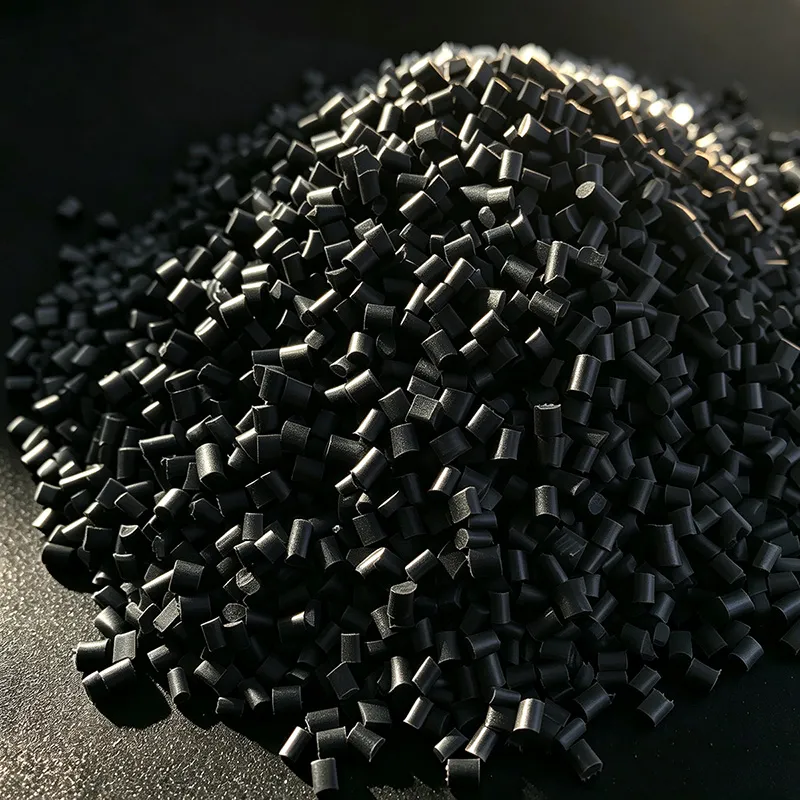
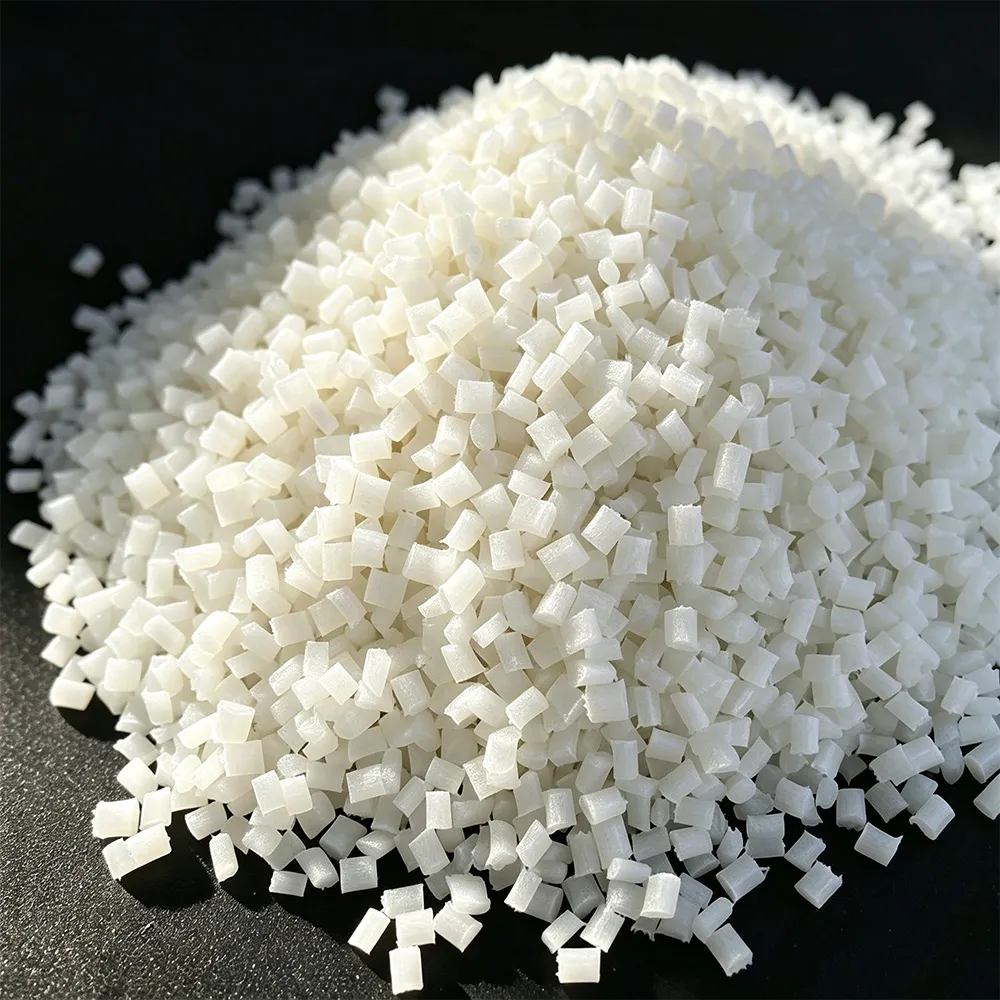
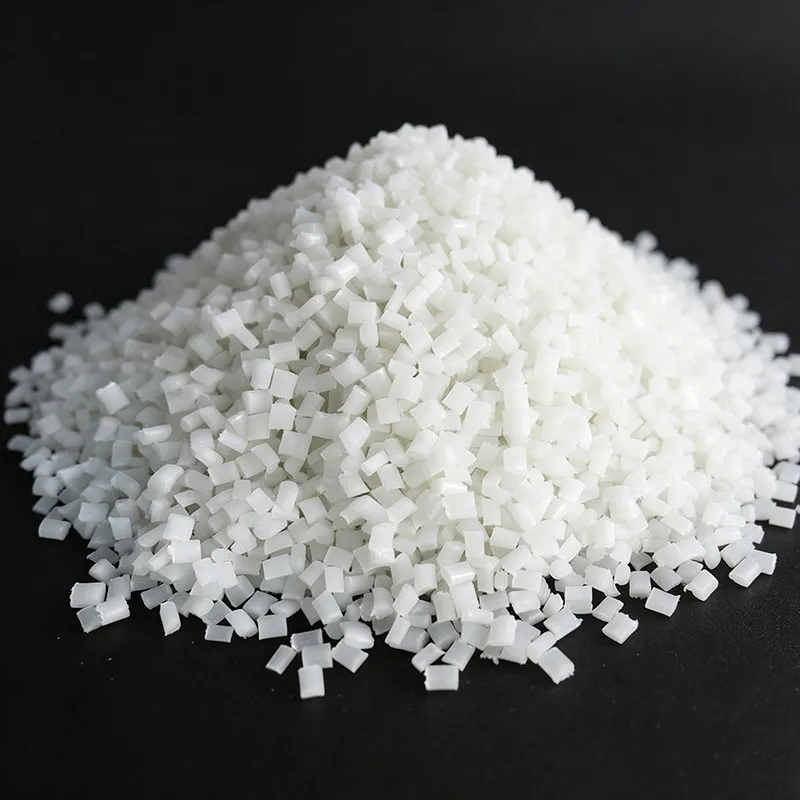
When we say "PA6 GF30", the glass fiber is only 30% by weight. The remaining 70% is the formulation matrix. A typical production recipe on a twin-screw extruder looks like this before any customization:
| Component | Weight % | Role |
|---|---|---|
| PA6 base resin | ~68.5% | Matrix polymer, determines baseline strength & flow |
| E-glass chopped strands | 30.0% | Primary reinforcement — stiffness, strength, HDT |
| Aminosilane sizing (on fiber) | ~0.3% | Couples glass surface to PA6 amine/carboxyl end groups |
| Heat stabilizer (CuI/KI + phenolic) | ~0.4% | Long-term heat aging at 120–150°C |
| EBS lubricant | ~0.3% | External mold release, reduces screw torque |
| Color masterbatch | ~0.5% | Pigment dispersion (natural/black/custom) |
The last ~0.3% is moisture that always remains even after dehumidifying drying (why drying matters). Every one of these components has alternatives, and every alternative changes a property. We'll go through each one.
2. Base PA6 Resin — Viscosity Is the First Decision
PA6 resin is selected by relative viscosity (ηr, measured in 96% sulfuric acid at 25°C per ISO 307). This single number sets the trade-off between mechanical strength and processing flow.
Viscosity Grades Used in GF30 Compounding
Low viscosity (ηr 2.4–2.6): High flow, easy filling of thin-wall parts. Lower tensile and impact. Used in commodity GF30 where cycle time matters more than peak strength.
Medium viscosity (ηr 2.6–2.8): The workhorse for most structural GF30. Balances strength and moldability. This is the base for BFE06.
High viscosity (ηr 2.8–3.1): Higher molecular weight = more entanglement = better toughness and tensile retention. Used for premium grades like BFE01 and for parts subject to impact or fatigue. Requires higher melt temperature (260–280°C).
Practical impact: BFE01 and BFE06 both use 30% glass fiber — the 17 MPa tensile gap (162 vs 145 MPa) comes primarily from BFE01 using a higher-viscosity PA6 base resin. The resin choice is roughly 60% of the strength difference; the remaining 40% comes from glass fiber quality and coupling efficiency.
End-group chemistry also matters. PA6 with balanced amine-to-carboxyl end groups (≈1:1) gives the best coupling to aminosilane-sized glass fiber. Resins with excess carboxyl end groups hydrolyze faster during long heat aging, which is why resin specification is checked alongside viscosity.
3. Glass Fiber — Length, Diameter and Sizing
Not all 30% glass fiber performs the same. Three parameters control the reinforcement outcome:
Fiber Diameter
E-glass fibers are typically 10–13 μm in diameter. Finer fibers (10 μm) give more surface area per weight for coupling and higher tensile strength, but are harder to feed and more prone to breakage in the screw. Coarser fibers (13–17 μm) survive twin-screw shearing better and retain longer residual length, which favors impact resistance. Juhai's premium GF30 uses 10–11 μm fiber; commodity grades use 13 μm.
Chopped Strand Length
Feed strands are 3.0–4.5 mm long. After compounding, residual fiber length in the pellet is typically 200–400 μm. Longer residual length → higher impact strength. Shorter length → better surface finish. BFE01's Class-A surface is achieved partly by controlling residual fiber length below 300 μm — a balance between appearance and toughness.
Sizing Chemistry
The sizing (≈0.5–1.0% by weight on the fiber) is the single most underrated variable in GF PA6. A "PA6-specific" sizing uses aminosilane (γ-aminopropyltriethoxysilane, A-1100) as the coupling agent, blended with a film-forming polyurethane or epoxy binder and a lubricant. Generic glass fiber sized for PP or polyester will not bond to PA6 — you'll see 15–25% lower tensile and a "fibrous" fracture surface under SEM.
If you want to dig deeper into how glass fiber loading changes properties from GF15 to GF50, see our PA6 glass fiber content selection guide.
4. Coupling Agent — The Resin-Glass Bridge
The coupling agent is what turns a "PA6 + glass fiber blend" into a true composite. Without it, stress cannot transfer from the polymer matrix to the glass fiber — the fiber just acts as a hard filler.
How Aminosilane Works
Aminosilane (A-1100) has two reactive ends:
Silane end (–Si(OEt)3): Hydrolyzes to silanol groups, which condense with the hydroxyl groups on the glass surface, forming a stable Si–O–Si bond.
Amine end (–NH2): Reacts with the carboxyl end groups of PA6 during compounding (250–270°C), forming an amide bond to the polymer matrix.
This covalent bridge is what gives GF-reinforced PA6 its dramatic strength jump. A well-coupled GF30 PA6 has 150–165 MPa tensile; poorly coupled (wrong sizing) drops to 110–125 MPa even at the same glass content.
Additional Compatibilizer (Optional)
For standard GF30 PA6, the on-fiber aminosilane is enough. Compatibilizers like maleic anhydride-grafted PA6 (PA6-g-MAH, 1–3% loading) are only added when using generic fiber or when molding very large parts where fiber wet-out is critical. They boost tensile by 3–5% but add cost and can reduce flow.
5. Heat Stabilizer Package — CuI/KI vs Phenolic
PA6 oxidizes at elevated temperatures, causing chain scission and embrittlement. Without a heat stabilizer, GF30 PA6 loses ~40% of its tensile strength after 1,000 hours at 120°C. With the right package, it retains 85%+.
Two Stabilizer Families
| Stabilizer System | Loading | Best For |
|---|---|---|
| CuI/KI (copper iodide / potassium iodide) | 0.05–0.15% CuI + 0.2–0.4% KI | Long-term heat aging above 120°C, automotive under-hood. The gold standard for nylon heat stabilization. |
| Hindered phenolic (Irganox 1098/1010) + phosphite (Irgafos 168) | 0.2–0.4% + 0.1–0.2% | General purpose, lower cost, good processing stability. Sufficient for parts under 120°C continuous use. |
Why CuI/KI is special: The Cu⁺ ion acts as a radical scavenger that interrupts the autocatalytic oxidation cycle of polyamides. It's the only system that reliably maintains 80%+ tensile retention after 3,000 hours at 150°C — which is why ETF02 (high-temperature PA6) uses a CuI/KI + phenolic blend. Note: CuI can cause greenish discoloration at high loadings, so for natural-color parts the loading is kept at the lower end.
6. Lubricants & Processing Aids
Lubricants do not change mechanical properties much, but they determine whether the compound can be extruded and molded cleanly. The two main types in GF PA6:
EBS (ethylene bis-stearamide), 0.2–0.4%: External lubricant and mold release agent. Migrates to the pellet surface during cooling, providing release from the mold cavity without affecting bonding. Too much (>0.5%) causes delamination or paint-adhesion problems on Class-A surfaces.
Silicone masterbatch, 0.5–1.0% (optional): Used for wear-resistant grades or to reduce screw torque on high-viscosity resins. Not used in BFE01 because silicone interferes with painting and bonding.
A small amount of nucleating agent (talc 0.2–0.5% or sodium benzoate) is sometimes added to speed up crystallization and reduce cycle time, but it can increase brittleness — so premium impact grades skip it.
7. Full Formulation Table (BFE01 vs BFE06 vs GBA35)
This table shows how Juhai's three GF PA6 grades differ at the formulation level. All values are parts-by-weight in the compounding recipe. Glass fiber loading is the headline spec, but the resin grade and stabilizer package are what separate premium from economy.
| Formulation Component | BFE01 (Premium GF30) | BFE06 (Standard GF30) | GBA35 (Economy GF35) |
|---|---|---|---|
| PA6 base resin (ηr) | High visc. 2.9–3.1 | Medium visc. 2.6–2.8 | Medium visc. 2.5–2.7 |
| E-glass fiber (diameter) | 30% (10 μm) | 30% (13 μm) | 35% (13 μm) |
| Fiber sizing | PA6-specific aminosilane | PA6 aminosilane | Standard PA aminosilane |
| Heat stabilizer | CuI/KI + phenolic (0.4%) | Phenolic + phosphite (0.3%) | Phenolic (0.2%) |
| EBS lubricant | 0.3% | 0.3% | 0.3% |
| Tensile Strength (ISO 527) | 162 MPa | 145 MPa | 168 MPa |
| Notched Izod (kJ/m²) | 17 | 14 | 15 |
| Surface finish | Class-A (paintable) | Standard structural | Standard structural |
| Best fit application | Cosmetic electronics frames | Appliance housings, brackets | Pulleys, industrial parts |
Reading the table: BFE01 pays for high-viscosity resin, finer fiber and a CuI/KI stabilizer — that's the premium. BFE06 hits a balanced cost-stiffness sweet spot. GBA35 gets to 168 MPa not through premium ingredients but by pushing glass loading to 35%, trading impact and surface finish for raw stiffness. The full PA6 product series is built on this same formulation logic with different trade-offs.
8. Frequently Asked Questions
Q: Can I make my own PA6 GF30 by blending PA6 resin and glass fiber on my machine?
A: Technically yes, but practically no — not at production quality. The critical requirement is wet-out: every fiber filament must be fully coated and bonded by molten PA6 before the pellet is cut. This needs a twin-screw extruder with a glass-fiber side feeder and a dedicated coupling stage. A single-screw or simple blend will give you 110–125 MPa tensile and severe fiber clumping. The compounding step is what you're paying a modified-material supplier for.
Q: Why does 35% GF (GBA35) cost less than 30% GF premium (BFE01)?
A: Because glass fiber is cheaper than PA6 resin. Loading 35% glass means 5% less resin — and GBA35 uses commodity-grade resin and fiber without the CuI/KI heat stabilizer or Class-A surface control. So material cost goes down even as stiffness goes up. The trade-off is impact (15 vs 17 kJ/m²) and surface quality.
Q: Do I need to add my own heat stabilizer when molding GF30 PA6?
A: No. The stabilizer is already compounded into the pellet. Adding extra stabilizer at the molding press does not help and can cause plate-out or discoloration. What you DO need to add is drying — residual moisture above 0.08% hydrolyzes PA6 during melting, dropping viscosity and strength regardless of stabilizer. See our drying guide for the exact protocol.
Q: What happens if I use the wrong glass fiber sizing?
A: Three visible symptoms: (1) tensile strength drops 15–25%; (2) the fracture surface looks fibrous and powdery instead of a clean brittle break; (3) parts show "fiber read-through" on the surface. If you're seeing any of these with a purchased GF30 grade, the compounder likely used generic fiber. All Juhai GF PA6 grades use PA6-specific aminosilane-sized fiber.
Q: Can a GF30 PA6 reach 180 MPa tensile?
A: Only with specialized long-glass-fiber (LGF) technology or by using very high-viscosity resin (ηr 3.2+) with extremely efficient coupling — which also raises cost. For standard short-glass GF30 PA6, 155–165 MPa is the realistic ceiling, which is where BFE01 sits. To go beyond 170 MPa, most compounders move to GF35 or GF40. Compare the property ladder in our PA6 GF30 vs PA66 GF30 data article.
Summary: "PA6 GF30" is not a single recipe — it's a family of formulations where resin viscosity, fiber diameter, sizing chemistry and stabilizer package decide whether you get a 145 MPa commodity bracket material or a 162 MPa Class-A cosmetic grade. The glass fiber is the headline, but the other 70% is where the engineering happens. For a grade matched to your part's strength, temperature and surface requirements, explore the full PA6 series or request a custom formulation.