Processing Guide · Updated June 10, 2026 · Juhai R&D Center
Drying Nylon PA6 / PA66 Before Injection: Why 80°C × 4 Hours Matters
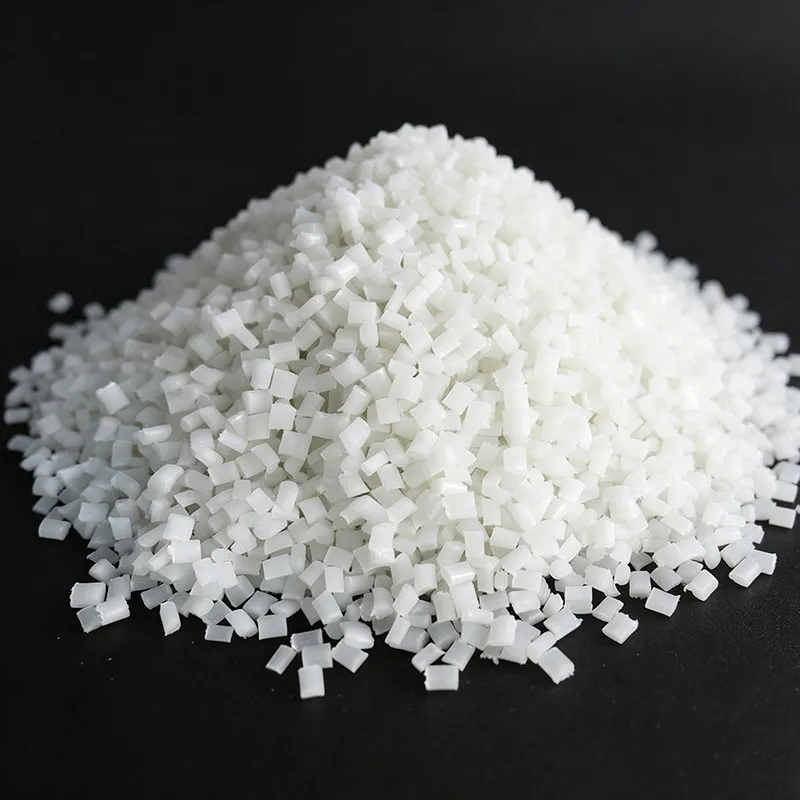
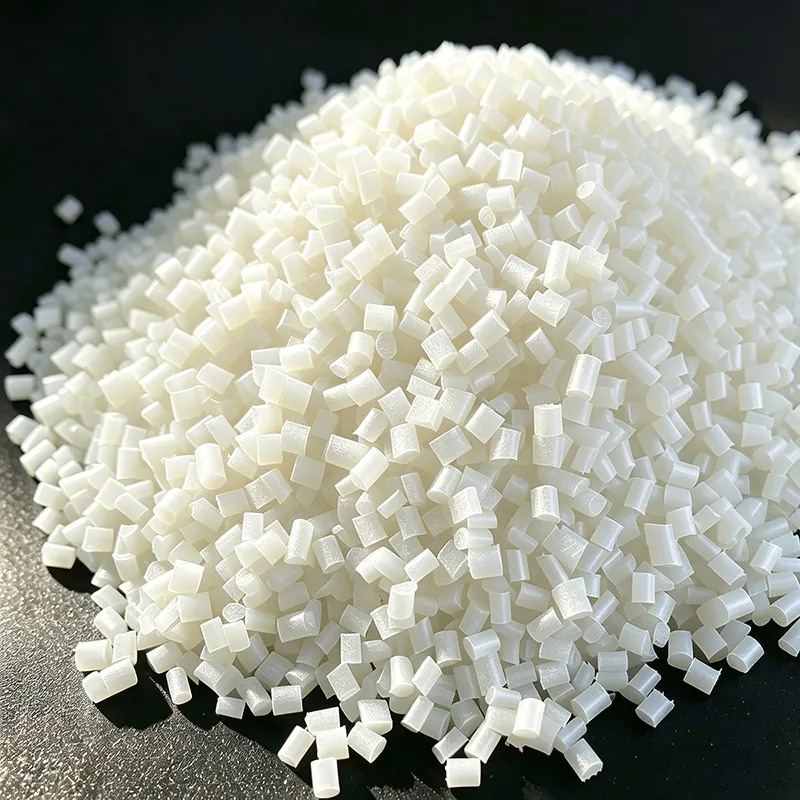
Nylon (PA6 and PA66) is hygroscopic — it absorbs moisture from the air until it reaches equilibrium of ~1.5–2.0% by weight at typical warehouse humidity. If you injection-mold undried nylon, that moisture flashes to steam at the 250°C melt temperature, erupts onto the surface as silver streaks (splay), hydrolyzes the polymer chains into brittle lower-molecular-weight fragments, and creates internal voids. The single most common cause of nylon molding defects is insufficient drying — here is the complete guide.

Table of Contents
1. Why Nylon Must Be Dried
PA6 and PA66 are polyamides — long chains of amide (-CONH-) linkages. Those amide groups are polar and attract water molecules through hydrogen bonding. At a typical 23°C / 50% RH warehouse, nylon absorbs moisture continuously until it reaches an equilibrium of roughly 1.5–2.0% by weight. That moisture sits inside the polymer matrix, not on the pellet surface — so simply wiping the pellets or letting them sit in a warm hopper does not remove it.
When undried nylon is fed into a 250°C injection-molding barrel, three failure mechanisms happen simultaneously:
Steam eruption — splay marks. Water boils instantly at the melt temperature. As the melt is injected, steam bubbles erupt onto the mold surface, leaving fan-shaped silver streaks radiating from the gate. This is the most visible symptom and the first one molders notice.
Hydrolysis — brittleness. At melt temperature, water reacts with the amide bonds, breaking the long polymer chains into shorter fragments. This drops the molecular weight and reduces impact strength by 20–30%, elongation by up to 70%, and produces parts that crack under load that dry material would survive easily. This is the most expensive symptom because it is invisible until the part fails in service.
Internal voids. Trapped steam bubbles that don't reach the surface stay inside as voids, especially in thick sections. Parts fail x-ray or ultrasonic inspection.
Bottom line: you cannot reliably mold PA6 or PA66 without drying. The cost of one rejected production batch — or one field-failure recall — dwarfs the cost of a proper desiccant dryer and 4 hours of pre-drying.
2. Moisture Equilibrium & What "Dry Enough" Means
The target moisture for safe molding of PA6 and PA66 is ≤0.08% by weight (0.20% for thin-wall high-flow parts; some ultra-precision applications target 0.05%). Above this threshold, splay and hydrolysis begin; below it, processing is safe.
| Moisture Content | Moldability | What You Will See |
|---|---|---|
| > 0.30% | Reject | Heavy splay, voids, severe hydrolysis, brittle parts |
| 0.15% –0.30% | Poor | Light splay, reduced impact, occasional voids |
| 0.08% –0.15% | Marginal | Slight splay on glossy surfaces, borderline impact |
| < 0.08% | Target | Clean surface, full mechanical properties |
| < 0.05% | Optimum | Best surface, best mechanicals, longest molecular life |
3. The 80°C × 4 Hours Procedure
Load dry, sealed pellets into the hopper. Open a fresh moisture-barrier bag; never leave pellets exposed to warehouse air for more than 1 hour before drying.
Set dryer to 80°C (PA6) or 80–85°C (PA66). Airflow target: 1 m³/min per 25 kg of pellets. Dew point: ≤ -30°C.
Run for 4 hours with continuous closed-loop dehumidified air recirculation.
Verify with Karl Fischer (preferred) or moisture analyzer before starting the press — target ≤0.08%.
Keep the hopper dry and warm during production. The dryer must remain running — once pellets cool, they re-absorb ambient moisture within 30 minutes.
Limit residence in the hopper to 6 hours max — prolonged 80°C exposure eventually causes slight yellowing and embrittlement of the top layer.
Why exactly 80°C? 80°C is above the dry-state glass transition temperature (~60°C for dry PA6), so water molecules in the amorphous phase become mobile enough to diffuse out efficiently. It is far below the 220°C melting point, so no risk of pellet sticking or oxidation. Going hotter (90–100°C) speeds drying slightly but risks surface yellowing; going cooler (60°C) makes diffusion too slow — you'd need 10+ hours to reach the target.
4. Desiccant Dryer vs Hopper (Hot-Air) Dryer
This distinction is the most misunderstood concept in nylon drying. Hot-air hopper dryers cannot dry hygroscopic nylons. They simply heat ambient air and blow it over the pellets — and if the ambient air is already at 50% RH, that air keeps the nylon at its equilibrium moisture. No drying occurs.
A true dehumidifying (desiccant) dryer pulls the recirculated process air through a desiccant bed (molecular sieve or silica gel) to a dew point of ≤ -30°C, then heats it to 80°C. The dry hot air creates a strong moisture gradient between the pellets and the air, pulling water out of the polymer matrix.
| Dryer Type | Air Dew Point | Dries PA6/PA66? | Typical Use |
|---|---|---|---|
| Hot-air hopper dryer | ≥ ambient (~+10°C) | No | PP, PE, mineral-filled, surface moisture |
| Dehumidifying desiccant dryer | ≤ -30°C | Yes | PA6, PA66, PBT, PET, PC, ABS |
| Compressed-air dryer | -40°C (clean) | Yes (small hoppers) | Small presses, lab-scale |
| Vacuum dryer | N/A (vacuum) | Yes (fast, 1–2 h) | Batch drying, premium applications |
If you are buying a dryer for PA6 or PA66 molding, budget for a dual-bed or honeycomb-rotor desiccant unit rated for your kg/hour throughput. A hot-air unit is a waste of money for nylon.
5. Karl Fischer Moisture Testing
Karl Fischer titration is the gold-standard method for measuring absolute moisture content in plastics. A small sample (2–3 g of pellets) is heated to drive off moisture into a titration cell; the water reacts quantitatively with iodine, and the consumed volume gives the moisture mass fraction. Coulometric Karl Fischer instruments resolve moisture down to 1 ppm.
Practical drying QA workflow:
Run a Karl Fischer check at the start of each shift on the top hopper sample;
Use a faster moisture analyzer (halogen balance) for in-process spot checks every 2 hours;
Document the moisture value on the shift log with lot traceability — required for ISO 9001 and UL Yellow Card traceability;
If moisture rises above 0.10% mid-run, pause the press and extend drying 1 hour before resuming.
Visual inspection of the first molded shot is the most expensive moisture test: if you see splay marks, you have already wasted material and machine time. Catch it with Karl Fischer instead.
6. Drying Charts for 11 Engineering Plastics
Reference drying parameters for the materials most often run alongside PA6 and PA66 on the same press. Always consult your compound supplier's datasheet first.
| Material | Hygroscopic? | Dryer Temp (°C) | Time (h) | Target Moisture (%) |
|---|---|---|---|---|
| PA6 (Nylon 6) | Yes | 80 | 4 | ≤0.08 |
| PA66 (Nylon 66) | Yes | 80 | 4 | ≤0.08 |
| PA6/PA66 copolymer (e.g. ETF02) | Yes | 80 | 4 | ≤0.08 |
| PA6 GF30 | Yes | 80 | 3.5 | ≤0.08 |
| PA66 GF30 | Yes | 80 | 3.5 | ≤0.08 |
| PA12 | Low | 80 | 3 | ≤0.10 |
| PP (incl. GF / impact modified) | No | 60–70 | 1–2 | surface only |
| PBT | Low | 120 | 3–4 | ≤0.05 |
| PET | Yes | 160–170 | 4–5 | ≤0.02 |
| PC | Yes | 120 | 3–4 | ≤0.02 |
| ABS | Yes | 80–85 | 3 | ≤0.10 |
Notice that PP does not require dehumidifying drying — a hot-air dryer is sufficient because PP is non-hygroscopic; only surface moisture needs removal. This is one reason PP is more forgiving to process than PA6 on smaller or older molding lines.
7. Storage & Re-Drying
Store PA6 and PA66 in sealed moisture-barrier (aluminum-lined) bags at < 30°C and < 60% RH;
Once a bag is opened, dry within 1 hour — do not leave pellets in an open hopper overnight;
Re-dry any pellets that have been exposed to ambient air for more than 2 hours, even if they look unchanged;
For long production runs, request Juhai deliver in 25 kg moisture-barrier bags (rather than 1,000 kg sacks) to minimize exposure each time you open a unit;
If pellets have been stored 6+ months, expect higher equilibrium moisture and extend the initial drying cycle by 1 hour.
8. FAQ
9. Summary & Next Steps
In one sentence: Drying PA6 and PA66 at 80°C for 4 hours in a dehumidifying dryer to ≤0.08% moisture — verified by Karl Fischer — is the single highest-ROI discipline on any nylon molding line. It eliminates 80% of splay, voids and brittle-failure defects, and protects the molecular weight of your resin lot. Pair this with our molding defects troubleshooting guide for full coverage of common processing issues.
Need Drying-Optimized Nylon Grades?
All Juhai PA6, PA66 and PA6/PA66 copolymer grades ship in moisture-barrier 25 kg or 1,000 kg packaging with documented drying parameters and lot-specific CoC. Ask our R&D team about low-moisture-pickup variants for humid-climate molding.
Talk to Juhai R&D →