Automotive Compliance · September 12, 2026 · Juhai R&D Center
PA6 Automotive Compliance — IATF 16949, IMDS, ELV, Thermal Aging & OEM Specs
Automotive is the most compliance-demanding application for modified PA6. A single under-hood bracket must satisfy a management system (IATF 16949), a material reporting system (IMDS), an end-of-life chemical restriction (ELV), a thermal-endurance standard (ISO 11346), and the buyer's own internal material specification (Ford WSS-M4D, GM GMW, Volkswagen TL). This article walks through each framework with the actual threshold values, test methods and standard references a PA6 supplier must deliver.
Table of Contents
1. IATF 16949 & the Five Core Tools
IATF 16949 is the international quality management system for the automotive industry. Unlike ISO 9001, it is not optional for direct supply to OEMs and Tier-1 suppliers — it is a gatekeeper. A PA6 compounder supplying automotive must hold valid IATF 16949 certification at the production site, with annual surveillance audits and recertification every three years.
The standard is built around five core tools (published by AIAG / VDA). For a PA6 material supplier, the relevant requirements of each tool are:
| Core Tool | What It Requires for PA6 | Key Deliverable |
|---|---|---|
| APQP Advanced Product Quality Planning | Structured development plan from quote to PPAP. Must include feasibility study, design FMEA (for the compound), and a process flow diagram. | APQP timeline with milestones |
| PPAP Production Part Approval Process | 18-element package submitted at Level 3 by default. For PA6 this includes: dimensional/material test results, process capability study (Cpk ≥ 1.33 on critical properties), MSA on tensile tester, and IMDS entry. | PPAP Level 3 submission package |
| FMEA Failure Mode & Effects Analysis | Process FMEA (PFMEA) for the compounding line. Each failure mode (e.g., "glass fiber under-feeding → low tensile") gets an RPN (Risk Priority Number = S × O × D) with mitigation. | PFMEA with RPN < 100 for critical modes |
| MSA Measurement System Analysis | Gage R&R study on tensile, impact and HDT measurement systems. Acceptance: %GRR < 10% of tolerance, NDC (number of distinct categories) ≥ 5. | GR&R report with NDC ≥ 5 |
| SPC Statistical Process Control | Control charts on critical-to-quality properties (glass content, MVR, tensile strength). Target Cpk ≥ 1.33 for long-term, Cpk ≥ 1.67 for safety-critical parts. | X-bar R chart with Cpk ≥ 1.33 |
Reference: IATF 16949:2016 (superseded ISO/TS 16949:2009). Core tools: AIAG APQP 2nd ed., AIAG PPAP 4th ed., AIAG-VDA FMEA 1st ed. (2019, replaces AIAG FMEA 4th ed. and VDA 4:1 Vol. 4), AIAG MSA 4th ed., AIAG SPC 2nd ed.
2. IMDS / CDX — Material Data Declaration
Every PA6 compound supplied to an automotive OEM must be declared in the International Material Data System (IMDS), or in CDX (the equivalent system used by BMW, Mercedes-Benz and Volvo). IMDS is a mandatory, structured material declaration — it is not optional, and no PPAP is accepted without a released IMDS entry.
A PA6 IMDS entry requires:
Material composition down to 0.1% by weight — every component (PA6 resin, glass fiber, lubricant, stabilizer, colorant) must be declared with its CAS number and weight fraction.
Substance-of-Very-High-Concern (SVHC) check — any REACH SVHC above 0.1% must be flagged; as of 2026 the SVHC list contains 240+ substances.
Heavy-metal declaration — lead, mercury, cadmium, hexavalent chromium must be declared at their actual concentration (ppm) for ELV compliance.
Recycled content declaration — percentage of post-consumer or post-industrial recycled PA6, if any.
The IMDS material node for a GF30 PA6 would list approximately: PA6 resin 68.5%, E-glass fiber 30%, EBS lubricant 0.3%, heat stabilizer 0.4%, color masterbatch 0.5%, residual moisture 0.3%. Each additive must be traceable to its CAS number; generic declarations ("lubricant" without CAS) are rejected by the OEM receiver.
Reference: IMDS Recommendation 001 (General Information), 013 (Polymers), 019 (Substances & Materials). CDX follows the same data structure but is hosted by DXC Technology.
3. ELV Directive 2000/53/EC — Restricted Substances
The EU End-of-Life Vehicles (ELV) Directive restricts four heavy metals in automotive materials. The limits are applied per homogeneous material (not per vehicle or per part), and they are the strictest widely-used chemical threshold in the automotive supply chain:
| Substance | Max Concentration | PA6 Relevance & Common Sources |
|---|---|---|
| Lead (Pb) | 0.10% (1,000 ppm) | Lead-based pigments (lead chromate yellow, lead molybdate), lead heat stabilizers. Modern PA6 uses lead-free pigments (organic azo, quinacridone) — compliant. |
| Mercury (Hg) | 0.10% (1,000 ppm) | Rarely present in PA6 formulations. Mercury-based biocides are not used in nylon compounding. |
| Cadmium (Cd) | 0.01% (100 ppm) | Cadmium pigments (cadmium sulfide red/yellow), some heat stabilizers. Strictest of the four. PA6 color masterbatches must be certified cadmium-free. |
| Hexavalent Chromium (Cr VI) | 0.10% (1,000 ppm) | Chromium VI is not intentionally added to PA6. Risk comes from contaminated inorganic pigments or recycled feedstock. Verified by EN 15205 (hexavalent chromium determination). |
ELV also sets a recycling target: 95% by average weight of each vehicle must be recoverable, of which 85% must be material recycling (the rest energy recovery). PA6's recyclability supports this — clean PA6 scrap can be re-extruded and re-pelletized with minimal property loss.
Reference: Directive 2000/53/EC (ELV), amended by Directive 2005/64/EC (reusability, recyclability, recoverability). Limits per Annex II, Table 1. Test methods: IEC 62321 (for Pb, Hg, Cd, Cr VI determination in polymers).
4. Long-term Thermal Aging — ISO 11346 & SAE J1139
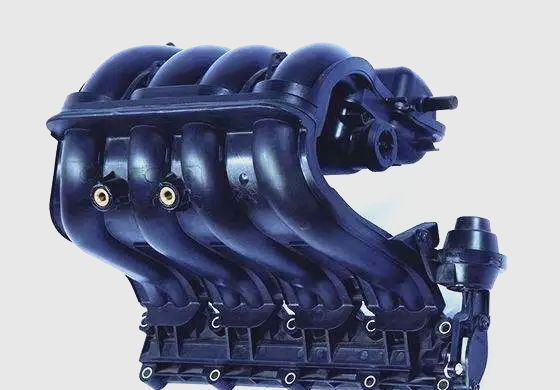
Under-hood PA6 parts (intake manifolds, engine covers, air ducts, sensor housings) operate at 120–175°C for thousands of hours. Short-term HDT (ISO 75) does not predict long-term survival — only a heat-aging program does.
ISO 11346 — Time-Temperature Superposition
ISO 11346 ("Plastics — Estimation of lifetime of plastics using Arrhenius plot") is the standard method for extrapolating long-term heat aging. The protocol:
Age specimens at at least 3 elevated temperatures (e.g., 150°C, 170°C, 190°C) for multiple time points up to ~5,000 hours each.
At each time point, test tensile strength (ISO 527) and notched impact (ISO 180/1A).
Define the end-of-life criterion — typically 50% retention of initial tensile strength.
Plot the logarithm of time-to-end-of-life vs. 1/T (Kelvin) — this is the Arrhenius plot.
Extrapolate the linear fit to the service temperature to estimate lifetime.
A heat-stabilized GF30 PA6 (CuI/KI package) typically shows the following aging behavior:
At 150°C, 3,000 hours: tensile retention ≥ 80%, impact retention ≥ 70%.
At 170°C, 1,000 hours: tensile retention ~75%.
Arrhenius extrapolated lifetime to 50% tensile at 140°C: > 10,000 hours.
SAE J1139 — Automotive Heat Aging Practice
SAE J1139 provides the test method for heat aging of plastics in the automotive context. It specifies aging in a forced-air oven with defined air exchange (3 to 10 volume changes per hour), and requires that specimens be aged in the as-molded state. The standard defines the "thermal endurance limit" as the temperature at which a 50% property drop occurs after a specified time.
For PA6, the critical design parameter is the difference between unstabilized and CuI/KI-stabilized grades:
Unstabilized PA6 GF30: tensile drops to 50% at ~1,000 h at 150°C.
CuI/KI-stabilized PA6 GF30 (e.g., ETF02): tensile drops to 50% at ~10,000 h at 150°C — a 10× improvement.
Reference: ISO 11346:2019. SAE J1139_201805. UL 746B (for RTI, see previous article) is the commercial equivalent used for UL-listed materials.
5. OEM Internal Material Specifications
Beyond global standards, every major OEM publishes its own internal material specification that defines the acceptance criteria for PA6. A supplier's grade must be listed on the OEM's approved material list (AML) before it can be used in production. These specs are detailed and property-specific.
| OEM | Spec No. | Material | Key Requirement |
|---|---|---|---|
| Ford | WSS-M4D618-B | PA6 GF30, heat-stabilized | Tensile ≥ 140 MPa; heat aging 150°C × 1,000h, retention ≥ 70% |
| Ford | WSS-M4D941-A | PA6 GF35, impact-modified | Notched Izod ≥ 10 kJ/m² at -30°C |
| GM | GMW15181 | PA6 GF30, stabilized | HDT @1.82 MPa ≥ 190°C; tensile ≥ 150 MPa |
| GM | GMW3032 | PA6, unfilled, conditioned | Notched Izod (conditioned) ≥ 45 kJ/m² |
| Volkswagen | TL 52231 | PA6 GF30, heat-stabilized | Thermal aging 150°C × 3,000h; tensile retention ≥ 60% |
| Volkswagen | TL 52241 | PA6 GF30, impact-modified | Notched Izod -30°C ≥ 20 kJ/m²; no break at -40°C |
| Mercedes-Benz | DBL 5410 | PA6 GF30, general purpose | Tensile ≥ 150 MPa; HDT ≥ 200°C |
| BMW | GS 93016 | PA6 GF30, heat-stabilized | Long-term heat aging 160°C × 2,000h; tensile retention ≥ 65% |
| PSA / Stellantis | B20 0012 | PA6 GF30 | Tensile ≥ 145 MPa; HDT ≥ 195°C |
| Renault | RNUR 1231 | PA6 GF30, stabilized | Heat aging 150°C × 2,000h; no brittle failure |
Note on spec numbers: OEM specs are revised frequently; always confirm the current revision with the customer's material engineering department. The values above are representative minimums and may vary by revision. For grades not on an OEM AML, a custom PPAP with full property testing against the spec is required.
6. Chemical & Fluid Resistance — ISO 175
Automotive PA6 parts contact fuels, engine oils, transmission fluids, brake fluids and coolants. Chemical resistance is tested per ISO 175 ("Plastics — Methods of test for the determination of the effects of immersion in liquid chemicals"). The test measures mass change, dimensional change and retention of tensile/impact properties after immersion.
Typical fluids and PA6's resistance profile:
| Fluid | Temp | Duration | PA6 GF30 Resistance |
|---|---|---|---|
| Gasoline (E10) | 23°C | 168 h | Good — mass gain < 2%, tensile retention > 85% |
| Diesel (B7) | 60°C | 1,000 h | Excellent — negligible mass change |
| Engine oil (5W-30) | 120°C | 1,000 h | Good — tensile retention > 75% |
| Ethylene glycol coolant (50%) | 110°C | 1,000 h | Moderate — hydrolysis accelerates; use heat-stabilized grade |
| Brake fluid (DOT 4) | 23°C | 168 h | Good — mass gain < 1% |
| Battery acid (30% H₂SO₄) | 23°C | 168 h | Excellent — PA6 is resistant to dilute acids |
Key caveat: PA6 hydrolyzes in hot, aqueous environments. Coolant (ethylene glycol + water) at 110°C is the most aggressive common automotive fluid for PA6 — it accelerates chain scission. For coolant-contacting parts, specify a hydrolysis-stabilized PA6 grade (with carbodiimide-based hydrolysis stabilizer) and validate with ISO 175 testing at the actual service temperature, not room temperature.
Reference: ISO 175:2010. For automotive coolant specifically, also refer to ASTM D3137 (hydrolytic stability of plastics).
7. VOC, Odor & Fogging — VDA 270 / 275 / PV 3900
For interior and under-hood PA6 parts, OEMs require emission testing. Three VDA / OEM methods dominate:
VDA 270 — Odor
Qualitative odor test by a trained panel. Specimens are heated in a sealed 1 L glass flask at 80°C for 2 hours, then odor is rated on a 1–6 scale:
Score 1: not perceptible
Score 2: perceptible, not bothersome
Score 3: clearly perceptible, not bothersome
Score 4: bothersome
Score 5: strongly bothersome
Score 6: intolerable
Typical automotive requirement: odor score ≤ 3 at 80°C. PA6 generally scores 2–3; high levels of residual monomer (caprolactam) or low-grade lubricants can push it to 4. Vacuum degassing during compounding and low-residual-monomer resin are the controls.
VDA 275 — Fogging
Measures condensable volatile emissions that could fog windshield interior. Specimen heated at 100°C for 16 hours; volatiles condense on a cooled aluminum foil or glass plate. Two methods:
Gravimetric method (A): weigh the condensed material. Requirement typically < 2 mg.
Reflectometric method (B): measure light reflectance of the condensed film. Requirement typically ≥ 90% reflectance.
PV 3900 (Volkswagen) / VDA 277 — VOC (Total Carbon)
Quantitative volatile organic compound measurement. VDA 277 uses headspace GC to measure total volatile carbon emissions; the result is reported as µg C/g. Common requirements: VOC ≤ 50 µg C/g for interior materials. PA6's VOC is dominated by caprolactam monomer and cyclic oligomers; keeping residual monomer below 0.3% is essential for passing.
Reference: VDA 270 (Odor), VDA 275 (Fogging), VDA 277 (Determination of VOC). PV 3900 is Volkswagen's internal VOC method, equivalent in principle to VDA 277.
8. End-of-Life & Recyclability
The ELV recycling target (85% material recycling per vehicle) puts a responsibility on material suppliers to support closed-loop recycling. PA6 is well-suited for mechanical recycling because it is a thermoplastic that can be re-melted and re-pelletized.
Post-industrial recycling (PIR): Clean PA6 process scrap (sprues, runners, off-spec pellets) can be re-ground and re-compounded. Up to 25% PIR can be blended with virgin PA6 GF30 with no significant property loss (tensile drops < 3%).
Post-consumer recycling (PCR): Automotive PA6 parts at end-of-life are harder to recycle due to paint, additives and contamination. Depolymerization to caprolactam (chemical recycling) is the high-purity route, but mechanical recycling of clean, unpainted PA6 is also practiced.
Recyclability declaration: IMDS requires declaration of recycled content percentage. OEMs increasingly set minimum PCR content targets (e.g., 20–30% for selected parts) to meet sustainability goals.
For Juhai PA6 grades, post-industrial scrap is reprocessed internally under controlled conditions, and PCR-containing grades are available as custom compounds through the FTF02 custom service.
Reference: ISO 15270 (Plastics waste — Guidelines for the recovery and recycling), ISO 10359-1/2 (determination of recyclable content).
.selectTdClass{background-color:#edf5fa !important}table.noBorderTable td,table.noBorderTable th,table.noBorderTable caption{border:1px dashed #ddd !important}table{margin-bottom:10px;border-collapse:collapse;display:table;}td,th{padding: 5px 10px;border: 1px solid #DDD;}caption{border:1px dashed #DDD;border-bottom:0;padding:3px;text-align:center;}th{border-top:1px solid #BBB;background-color:#F7F7F7;}table tr.firstRow th{border-top-width:2px;}.ue-table-interlace-color-single{ background-color: #fcfcfc; } .ue-table-interlace-color-double{ background-color: #f7faff; }td p{margin:0;padding:0;}
Summary of which automotive compliance frameworks each Juhai PA6 grade is designed for. Automotive grades typically require heat stabilization (CuI/KI) and IATF 16949 production.
| Compliance Item | ETF02 (High-Temp GF30) | ETF01 (Toughened GF25) | BFE01 (Premium GF30) |
|---|---|---|---|
| IATF 16949 production | ✓ | ✓ | ✓ (ISO 9001) |
| IMDS / CDX entry | ✓ | ✓ | ✓ |
| ELV (Pb/Hg/Cd/Cr VI) | ✓ | ✓ | ✓ |
| Thermal aging 150°C × 3,000h (retention) | ≥ 80% | ≥ 65% | ≥ 70% |
| HDT @1.82 MPa (ISO 75) | 210°C | 195°C | 198°C |
| Notched Izod -30°C | 9 kJ/m² | 20 kJ/m² (no break) | 6 kJ/m² |
| VDA 270 odor (80°C) | ≤ 3 | ≤ 3 | ≤ 3 |
| OEM AML listing | On request (PPAP) | On request (PPAP) | On request (PPAP) |
10. Frequently Asked Questions
Q: Is ISO 9001 enough for automotive, or do I need IATF 16949?
A: For direct supply to an OEM or Tier-1, IATF 16949 is required. ISO 9001 alone is generally not accepted for automotive production parts. If you supply through a Tier-2 that is IATF-certified, ISO 9001 may be sufficient, but the Tier-1 will still require PPAP-level documentation. Juhai operates under ISO 9001 and supports full PPAP submission; IATF 16949 certification at the production site is available for automotive programs on request.
Q: What exactly must be declared in IMDS for a PA6 GF30 compound?
A: Every substance above 0.1% by weight, identified by CAS number. For a typical GF30 PA6: PA6 resin (CAS 25038-54-4, ~68.5%), E-glass fiber (CAS 65997-17-3, 30%), EBS lubricant (CAS 110-30-5, 0.3%), copper iodide heat stabilizer (CAS 7681-65-4, 0.05–0.15%), potassium iodide (CAS 7681-11-0, 0.2–0.4%), hindered phenolic antioxidant (e.g., N,N'-hexane-1,6-diylbis(3-(3,5-di-tert-butyl-4-hydroxyphenylpropionamide)), CAS 23128-74-7, 0.2%). Colorants must also be declared with their pigment CAS numbers.
Q: Why is cadmium limited to 100 ppm while lead is 1,000 ppm in ELV?
A: Cadmium is a more potent toxicant and carcinogen than lead, and its use was already heavily restricted in the EU before ELV (Cd is also restricted under the REACH restriction Annex XVII entry 27). The 100 ppm (0.01%) limit reflects cadmium's higher toxicity. For PA6, the risk is cadmium-based pigments — all automotive color masterbatches must be cadmium-free, verified by ICP-OES or XRF per IEC 62321.
Q: How is the Arrhenius lifetime extrapolation validated?
A: ISO 11346 requires at least 3 aging temperatures and the linear fit of log(time) vs. 1/T must have a correlation coefficient R² ≥ 0.8. Extrapolation beyond the measured data range is limited — typically to no more than 1 decade (10×) beyond the longest measured time. For example, if you age for 5,000 hours at the highest temperature, the extrapolated lifetime at the service temperature should not exceed ~50,000 hours without validation. Real-world validation at the service temperature for a portion of the projected lifetime is always recommended.
Q: Can a single PA6 grade meet all OEM specs simultaneously?
A: Rarely. OEM specs differ in their emphasis — Ford WSS-M4D618-B requires 150°C × 1,000h aging, Volkswagen TL 52231 requires 150°C × 3,000h, BMW GS 93016 requires 160°C × 2,000h. A single formulation may meet two or three, but a heat-stabilized GF30 PA6 that passes BMW's 160°C requirement may have slightly lower flow than a grade optimized for Ford. This is why OEM-specific grades (and PPAP submissions per spec) are standard practice in automotive compounding.
Summary: Automotive PA6 compliance is a stack of overlapping frameworks — IATF 16949 for the management system, IMDS for material data, ELV for heavy-metal restrictions, ISO 11346 for thermal lifetime, OEM specs (Ford WSS-M4D, GM GMW, VW TL) for property acceptance, and VDA 270/275/277 for emissions. Each framework has exact thresholds (Cd ≤ 100 ppm, GRR < 10%, Cpk ≥ 1.33, odor ≤ 3) and a defined test method. For an under-hood PA6 part, the safe starting point is a CuI/KI heat-stabilized GF30 grade produced under IATF 16949 with IMDS declaration and ELV compliance, then validated against the specific OEM spec and service-temperature aging requirement.